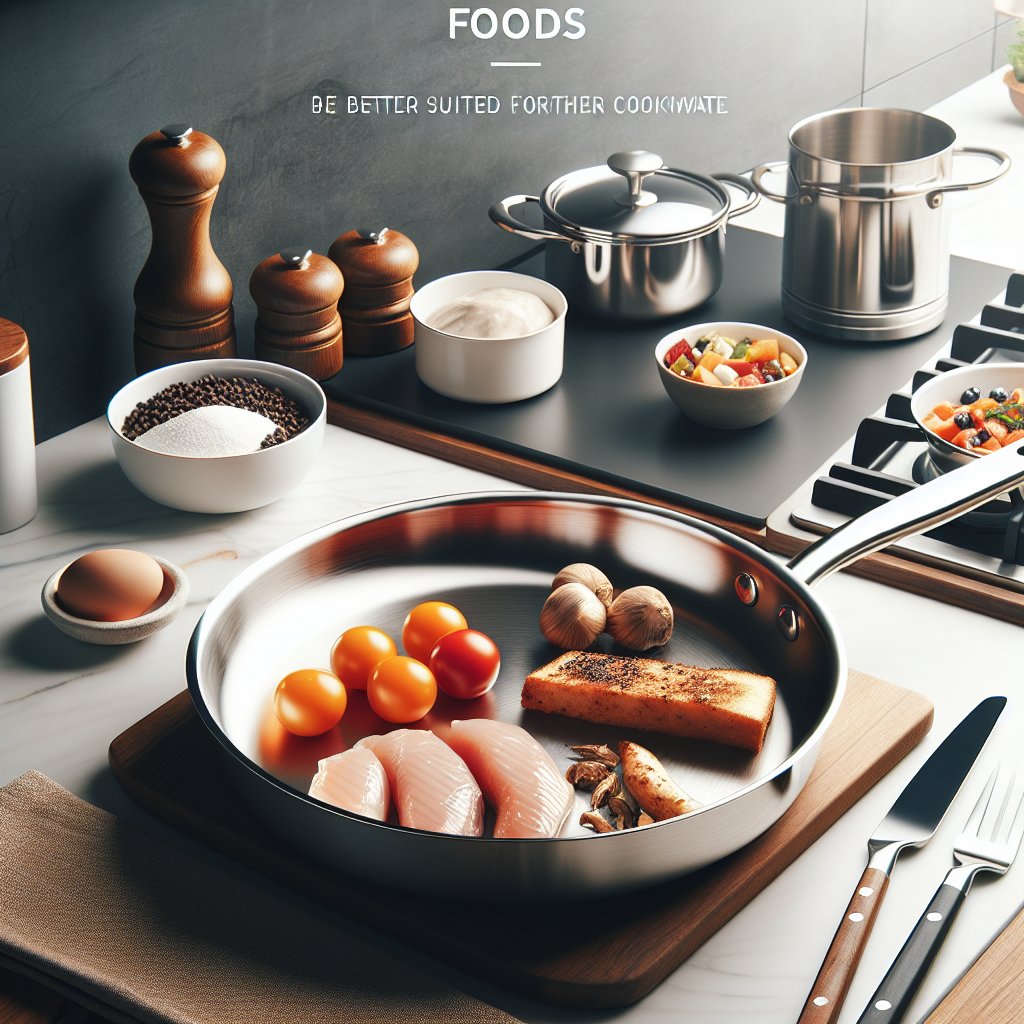
Stainless steel skillets are popular in both home and professional kitchens due to their durability and sleek design. However, they’re not suitable for every type of food, especially those that are acidic, sticky, or delicate. For instance, tomato sauce can react with the metal, causing discoloration and potential leaching of nickel and chromium. It’s advisable to use non-reactive cookware like enameled, cast-iron, or nonstick pans for such sauces.
Eggs are another challenging food to cook in stainless steel, as they tend to stick unless the pan is well-preheated and seasoned. A nonstick skillet or a seasoned cast-iron pan is preferred for eggs. Similarly, pancakes and thin crepes are not ideal candidates for stainless steel pans, as they can stick and resist easy flipping.
When it comes to delicate fish filets, they can also break apart if cooked in stainless steel. For a better cooking experience, opt for nonstick or seasoned cast-iron pans.
Although stainless steel skillets can handle high heat, grilling is more suitable for extremely high-heat searing like steak preparation, which benefits from the grill’s ability to add charred flavor and grill marks without sticking—plus, it minimizes mess.
By being mindful of these recommendations, you can ensure a smoother and more successful cooking experience using the right type of cookware.
Five Foods to Avoid Cooking in Stainless Steel Skillets