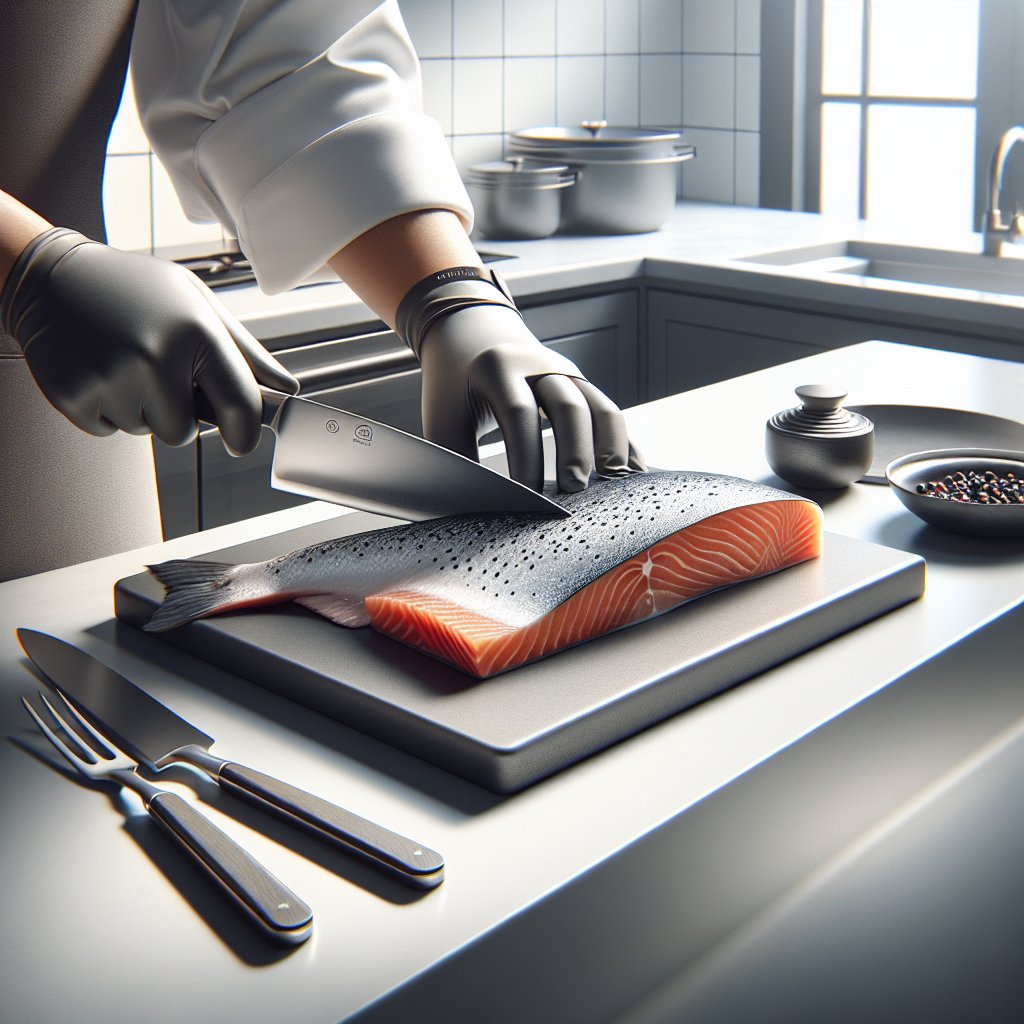
Bid farewell to salmon skin! While salmon skin is loaded with nutrients such as vitamin B and omega-3 fatty acids, not everyone enjoys eating it. Fortunately, removing salmon skin is straightforward if you know the proper techniques. Here, we provide a step-by-step guide to detaching the skin, along with some handy tips to remember.
Various methods exist to skin salmon, each differing in ease and suitability depending on your skill, time, and serving plans. One popular approach is pouring hot water over the salmon skin, allowing it to cool, and then removing it. This is great for beginners as it doesn’t need a sharp knife, although it involves extra tools and a bit more time.
To use this method, place the salmon skin-side up on a wire rack over a baking dish, boil a cup of water, and pour the boiling water over the skin. Once the water cools, gently peel the skin away.
Alternatively, you can remove the skin after cooking. While this needs a bit of finesse and may be messy if the salmon was marinated, it involves placing the cooked salmon skin-side up and gently pulling the skin away with a fork.
The most efficient and professional way is using a flexible knife, like a fillet knife. Although it takes practice and patience, it’s considered the easiest method by experts.
Consuming salmon skin is perfectly safe and nutritious, offering a salty, savory crunch with a fatty texture. Chef Silman suggests baking seasoned skin for a delightful treat. Generally, it’s best to cook salmon with the skin on to prevent overcooking, except when poaching, where it’s better to remove the skin first.
This technique is versatile and works for other fish like steelhead trout, snapper, or branzino, using the same knife approach.