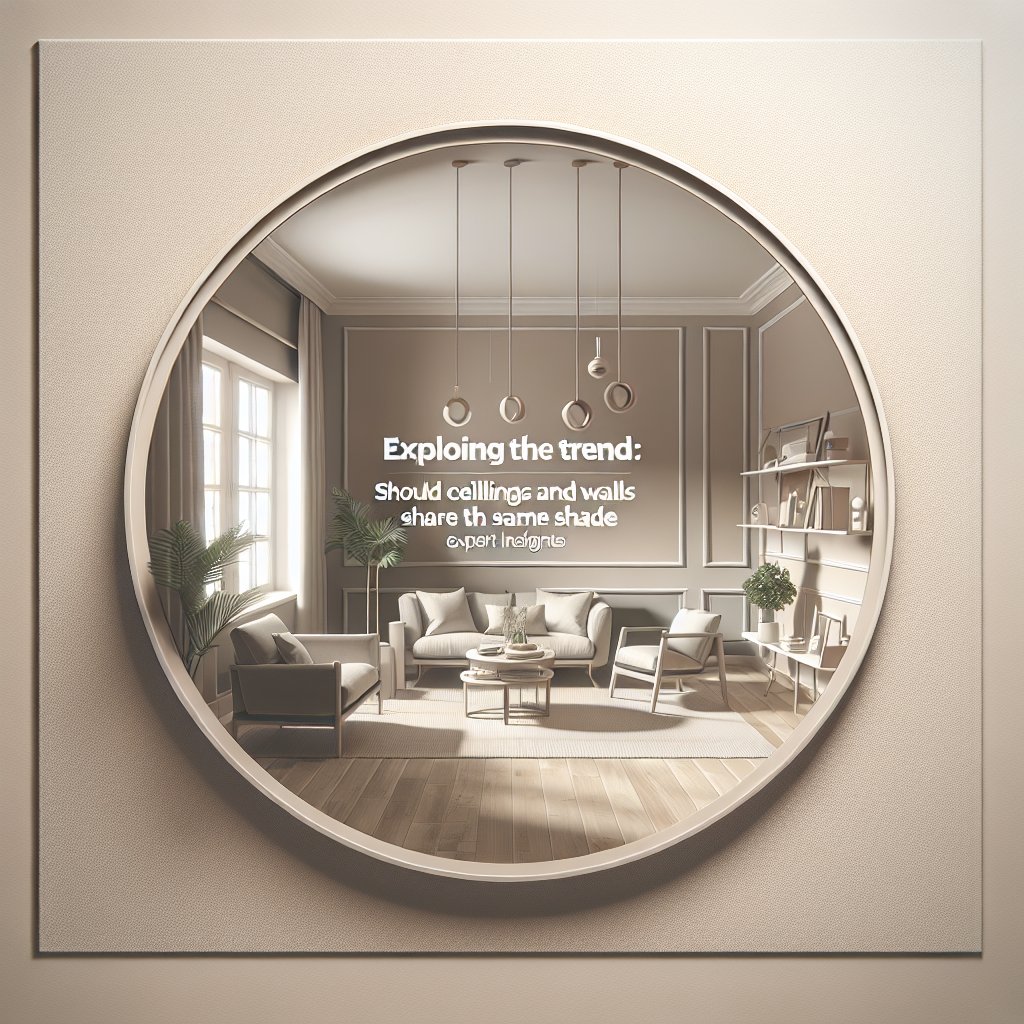
When considering painting a room, a common question arises: should the ceiling be the same color as the walls? To assist in this decision, home decor experts share the pros and cons of matching ceiling and wall colors. Here’s their advice, along with some color ideas to help achieve the desired look.
Contrary to the thought that matching colors might be dull, experts argue there are several advantages. Interior designer Sarah Stacey from Austin recommends wrapping the room, including the ceiling, in the same color to maintain a cohesive and moody vibe. She suggests having the paint store add 50% white to the original wall color for the ceiling to prevent the room from appearing too dark and recommends using flat paint popular today.
For a dramatic effect, Stacey suggests a lacquer finish on the ceiling, especially suitable for smooth plaster ceilings. Los Angeles designer Anita Yokota advises against contrasting whites for walls and ceilings to avoid a dingy appearance, and Melinda O’Connor emphasizes that matching colors in angled or dormered ceilings can create a cozy, elongated space.
One notable trick is to paint walls and ceilings the same color to make a room appear larger and taller. Light colors enhance this effect, while darker hues with ample natural light can add drama without shrinking the space. The cost efficiency of using one paint color also appeals since larger quantities of the same paint tend to be more cost-effective.
However, there are drawbacks. A monochromatic color scheme may reduce contrast, making flaws more visible and potentially overwhelming the room with an intense vibe, especially if darker hues are chosen. Carefully selecting complementary furniture colors, such as using white or black furniture as accents, can mitigate these effects.
Welch, a designer from New York, recommends painting with a 20% lighter shade on ceilings in dimly lit rooms to enhance brightness, while sunlit spaces can embrace the same color throughout. Various finishes like flat, satin, and high-gloss offer different light reflections and cleaning difficulties.
Opting for black or blue tones can create sophisticated or tranquil spaces, respectively. A white scheme remains classic and enlarges the feeling of a room. Regardless of choice, always paint the ceiling first to facilitate any necessary touch-ups on walls.
In conclusion, the decision to paint ceilings and walls the same color should consider lighting, space size, and intended ambiance to strike a balance between dramatic and cozy atmospheres.