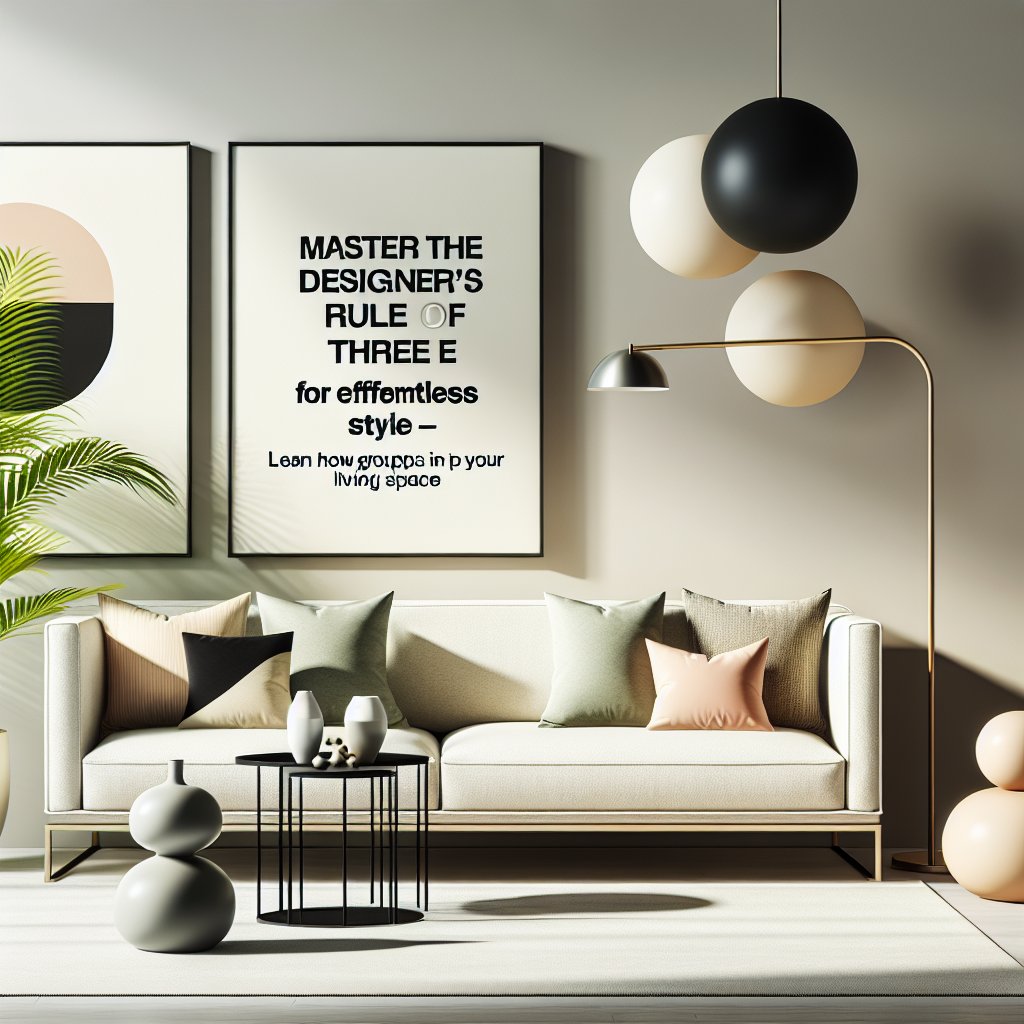
Styling your home can sometimes feel daunting, especially when placing decorative items like candlesticks and vases. A simple and effective approach is using the “rule of three,” a favorite among designers when you’re uncertain about your design choices.
Designer Lindsey Colhoun explains that this principle of grouping items in odd numbers, particularly three, is rooted in the human eye’s natural preference for balance and movement. Items arranged in threes appear layered and relaxed, making spaces feel more collected rather than overly curated.
While the rule is a guideline, it creates an organic aesthetic. Our eyes are attracted to asymmetry and subtle differences, which contribute to a comfortable and visually inviting environment, avoiding the ‘perfect’ or overly staged look. This concept isn’t limited to accessories; it applies also to furniture arrangements, lighting, and color schemes.
Designer Kimberly Oxford notes that three allows for variations in height, scale, or texture, maintaining cohesiveness. In a living room, for example, a sofa paired with two accent chairs creates a more dynamic arrangement than twin sofas. Above a bed, three artworks often work better than two.
For those hesitant about decorating shelves, Liz Hoekzema suggests items of staggered heights, positioning two larger pieces on the edges and a shorter one in the middle, creating a ‘family’ that pairs well with single large objects or stacks of books.
Variation is key; the rule of three doesn’t mean identical items. As Oxford advises, vary the scale and height for a layered look, anchoring the group with a prominent piece while others complement it. Think of the arrangement like a conversation among items, rather than identical participants.
Orie Prince highlights the importance of balance over matching. A trio works best with a clear focal point and two complementary pieces, avoiding competition among identical items.
Remember, while the rule of three is a guide, it’s not absolute. As Colhoun warns, strict adherence can lead to an overly styled impression. Sometimes, symmetry or a singular statement piece can be equally impactful, depending on the space.
Ultimately, trust your intuition—if a grouping of three doesn’t resonate, your personal taste should lead. If it looks right and feels right to you, it likely enhances your space beautifully.