Understanding the Complexities of Suicide
Suicide is a challenging subject often overshadowed by stigma, largely due to misconceptions about its causes and implications. Believing that suicidal behavior is merely an appeal for attention or a sign of weakness overlooks the profound pain and psychological distress faced by those considering it. Approaching this sensitive topic with genuine empathy and understanding can make a tangible difference in the lives of those affected.
The Myths and Realities of Suicidal Thoughts
Suicide prevention is possible, and having suicidal thoughts does not necessarily indicate a concrete plan or intent to end one’s life. These thoughts, though distressing, should be seen as signals for the need for support, prompting connection to essential mental health resources which provide vital guidance and assistance.
Breaking Down Misconceptions
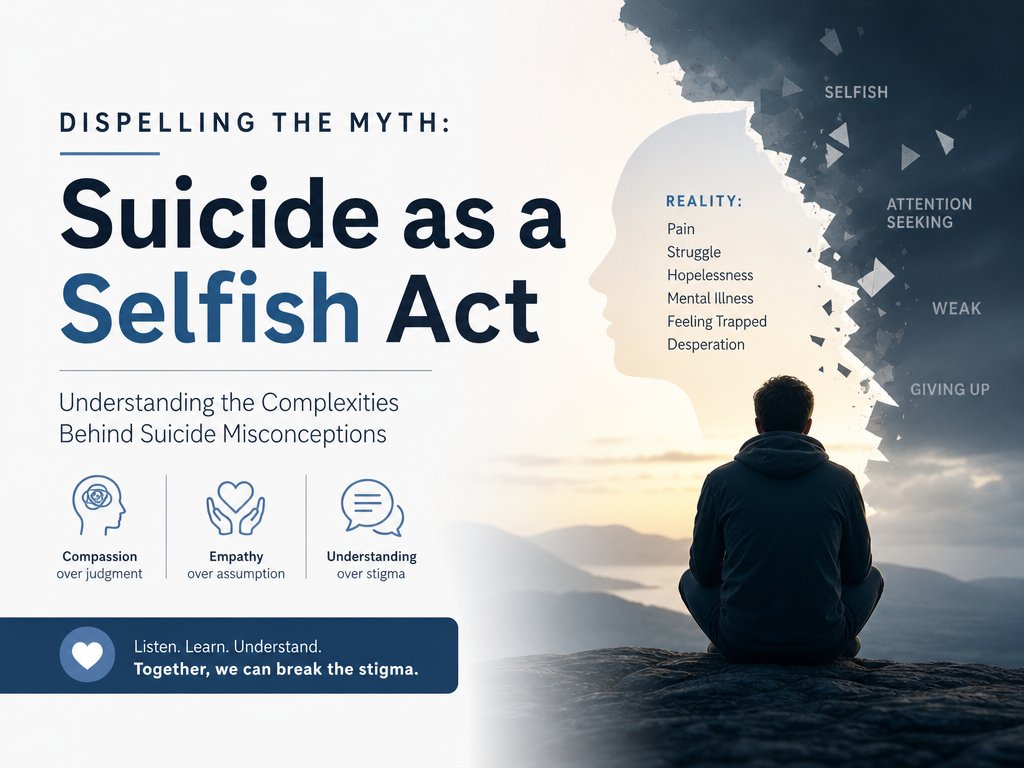
A common but harmful stereotype is that suicide is rooted in selfishness. This misconception fails to capture the complexity and depth of distress that individuals endure. Those facing these challenges often experience overwhelming emotional turmoil, leading to a narrow and confused perception of their available choices.
The Influence of Crisis
Various crises can propel individuals toward suicidal thoughts, including intense personal trauma, unrelenting stress, or chronic mental and physical pain. External factors such as bullying, financial hardship, and histories of abuse can significantly heighten a person’s vulnerability. Misconceptions about selfishness often stem from a lack of understanding and the grief of those left behind.
Why Suicide Is Misunderstood as Selfish
Labeling suicide as a selfish act overlooks the intense personal battles faced by those affected. Suicidal thoughts frequently accompany feelings of guilt and unwantedness, where individuals genuinely perceive themselves as burdens to their loved ones, hindering their ability to ask for or accept support.
Challenging the Selfishness Myth
Suicidal behavior is more about attempting to escape unbearable pain than any intention to harm others. Those struggling require compassionate support, and dismissing their situation as attention-seeking only exacerbates their feelings of loneliness and inadequacy.
The Role of Mental Health Conditions
Mental health conditions such as depression, anxiety, and bipolar disorder often play a significant role in suicidal ideation. These illnesses can distort an individual’s self-image and potential, making it difficult to see a way forward. Recognizing the impact of these conditions highlights the necessity for compassionate mental health care and support.
Providing Empathy and Effective Support
Active listening and prompt support provision are essential to effectively challenge these damaging myths. Addressing suicidality should always be done with sensitivity—openly asking about suicidal thoughts offers a chance to start meaningful conversations that may lead to crucial help and healing opportunities.
Raising Awareness to Combat Stigma
Continual education on the realities of suicide and its underlying factors is critical in assisting those suffering. Creating opportunities for open dialogue and sharing factual information mitigates stigma and nurtures an environment where individuals feel secure in seeking help.
Empathy should extend beyond immediate interactions to include advocating for systemic improvements that widen access to mental health resources and support structures. By integrating awareness efforts, society can evolve towards perceptions that emphasize understanding and valuing those dealing with mental health issues.
Fostering Community Support Networks
Community support networks can have a profound impact on prevention efforts. Encouraging communities to develop peer support systems and mental health first aid training can empower individuals to assist others effectively. These initiatives can provide early intervention and connect people to professional resources.
Ultimately, viewing suicide as a complex issue rather than a selfish act fosters empathy, encouraging reduced stigma. Persistent educational and supportive initiatives can offer a pathway to healing, ensuring individuals contemplating suicide receive the compassion and assistance necessary for their well-being.
Conclusion
Understanding suicide as a multifaceted issue is vital. By addressing misconceptions, raising awareness, and fostering supportive environments, society can make significant strides in prevention and support for those grappling with suicidal thoughts. This empathetic approach not only reduces stigma but also opens pathways for healing and recovery, leading to a society where individuals feel valued and supported in their struggles.