Introduction to Atypical Depression
Depression often conjures feelings of persistent sadness. However, depression can manifest in various ways beyond classic symptoms of sadness. This form of depression, known as atypical or nondysphoric depression, includes a complex array of emotional symptoms, presenting unique challenges in diagnosis and management.
Symptoms without Sadness
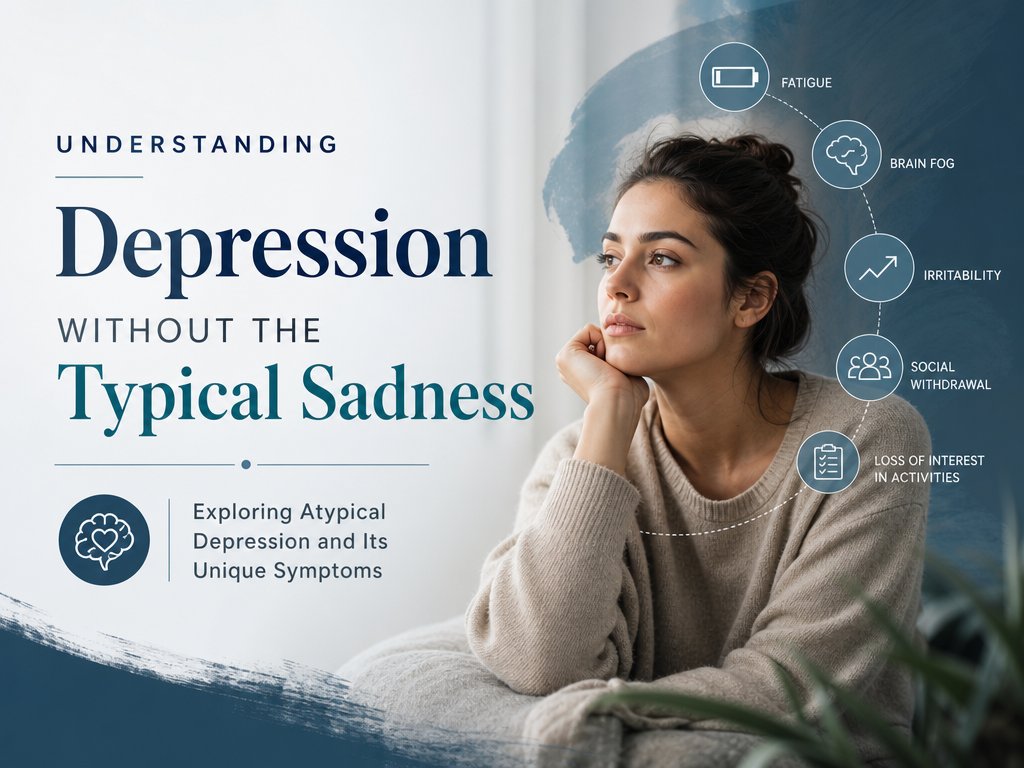
Individuals with atypical depression may experience emotional numbness or disconnection from people around them. They may lose interest in activities once enjoyed or feel hopeless, which doesn’t explicitly translate into sadness. It’s common for these individuals to feel more anger or frustration instead.
These mood disturbances can sometimes be perceived as having a “bad attitude” or intentional behavior changes instead of being recognized as signs of depression. It’s essential for both individuals and those around them to understand that this behavior is rooted in a deeper, often misunderstood mental health struggle.
Recognizing Atypical Depression
Recognizing that symptoms like irritability or disinterest can still indicate depression is crucial. Identifying these symptoms early can pave the way for seeking appropriate mental health care. Consulting a healthcare provider can help pinpoint when these feelings began, how they affect daily life, and their underlying causes. Recognizing atypical depression as a legitimate condition underscores the importance of comprehensive mental health awareness.
Seeking Treatment and Support
Finding suitable treatment can require exploration, but support is accessible. No person facing depression is alone in their journey. Professional healthcare guidance is invaluable in managing the symptoms and improving quality of life. Telehealth services, support groups, and hotlines offer additional resources for ongoing support.
Last reviewed on February 27, 2025.