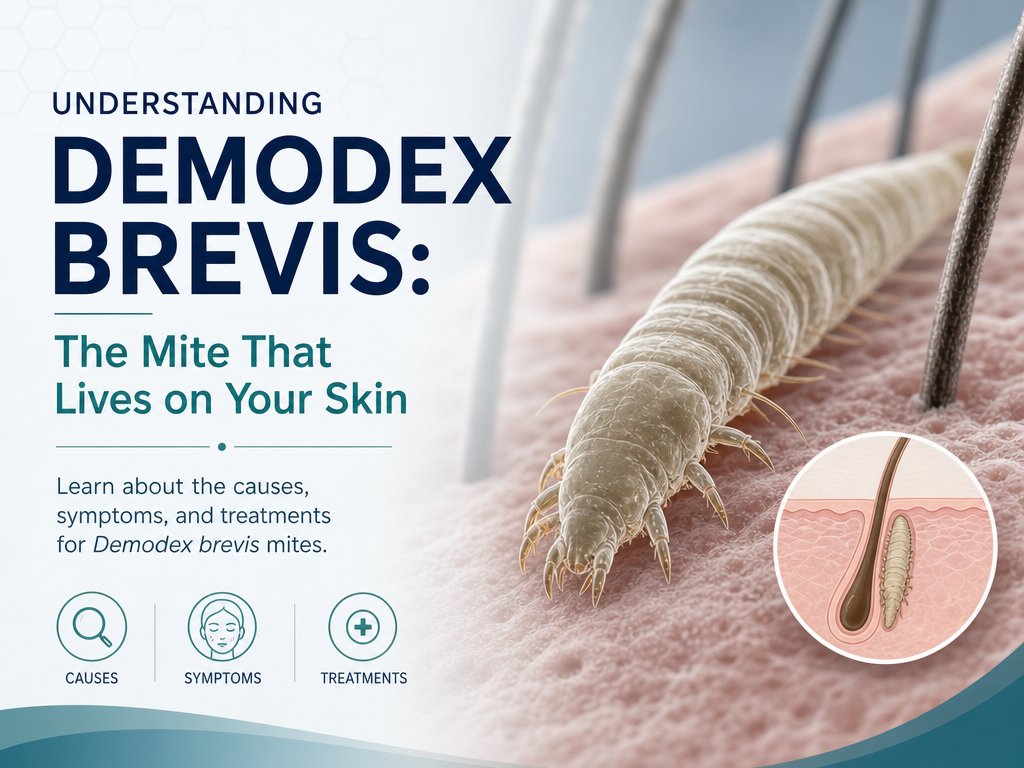
What is Demodex Brevis?
Demodex brevis is a microscopic mite residing in the oil glands of human hair follicles. Predominantly found on the face, it can also inhabit other body parts such as the neck and chest. This article dives into its nature, symptoms, and potential treatments.
Characteristics and Differences
Size and Visibility
Demodex brevis mites are incredibly small, measuring only between 0.15 to 0.2 millimeters. This means they are invisible to the naked eye. A notable characteristic is their habitat preference: while Demodex folliculorum mites also dwell on the face, Demodex brevis can be found both on the face and around the body.
Habitat and Feeding
Unlike Demodex folliculorum, which feeds on skin cells, Demodex brevis thrives on sebum, the oily substance in oil glands linked to hair follicles. This proves pivotal in their potential for causing skin reactions when populations become unusually high.
Symptoms and Diagnosis
The presence of Demodex brevis typically goes unnoticed unless they multiply greatly. Symptoms occur due to their oil-gland feeding habits, oftentimes resembling other skin conditions. Diagnosis usually requires a skin biopsy, where tissue samples are analyzed under a microscope.
Potential Complications
While common in adults, particularly with advancing age, heavy mite populations can lead to issues like severe skin conditions and blepharitis—an inflammation of the eyelids. Such complications arise if the mites proliferate excessively due to favorable conditions like blocked oil glands.
Treatment and Prevention
Hygiene and Home Remedies
Most cases of Demodex brevis do not necessitate medical intervention. Personal hygiene practices, such as washing your face regularly and removing excess oils, can manage mite populations effectively.
Clinical Treatments
In cases where infestations are significant, and symptoms manifest more prominently, doctors may recommend topical medications or oral treatments that target the mites and their eggs by eliminating excess oils.
Conclusively, understanding and managing Demodex brevis through hygiene and, where necessary, medical intervention ensures skin remains healthy despite their inherent presence.