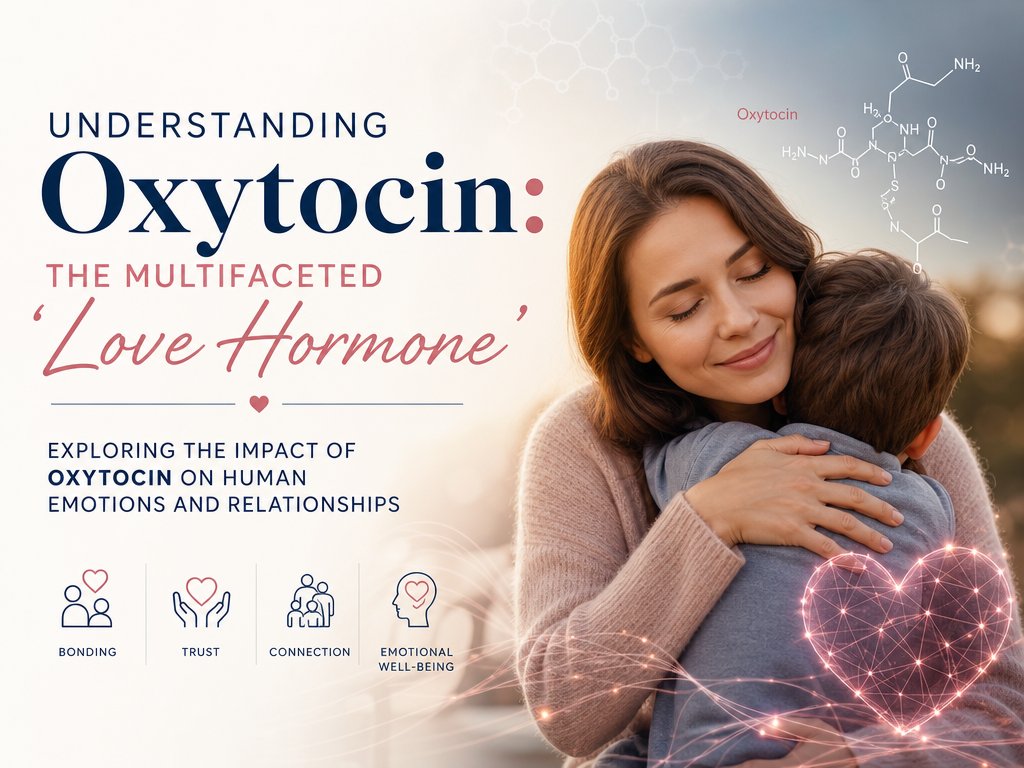
Introduction to Oxytocin
Commonly referred to as the “love hormone,” oxytocin has significant emotional effects, influencing romantic, familial, and social interactions. Researchers have observed that couples who are newly in love often have higher oxytocin levels compared to those in longer-term relationships or single individuals. This elevated level of the hormone not only enhances the feelings of attachment and bonding between partners but also contributes to a sense of happiness and well-being. However, its influence extends beyond new relationships; oxytocin plays a crucial role in sexual experiences by enhancing orgasms and fostering deeper interpersonal connections. Through its impact on emotional responses, oxytocin encourages feelings of trust, safety, and comfort within social groups. Additionally, oxytocin’s effects are not limited to romantic relationships but also span to broader social interactions, facilitating cooperation and empathy among individuals, thus strengthening community ties and group dynamics.
The Biological Role of Oxytocin
Oxytocin functions as both a hormone and neurotransmitter fundamental to reproduction and overall human interaction. In women, oxytocin is key during childbirth as it induces labor and enables the process of milk ejection during breastfeeding, facilitating essential early mother-child bonding. For men, oxytocin supports reproductive functions by facilitating sperm movement, thereby playing a critical role in conception. Produced in the hypothalamus and secreted by the pituitary gland, oxytocin works in conjunction with other neurotransmitters like dopamine and serotonin, collectively referred to as “happy hormones.” These chemicals work synergistically to generate pleasant emotional responses when interacting with others, enhancing feelings of contentment and connection. On a neurological level, oxytocin interacts with brain regions responsible for processing emotional reactions and social recognition, underscoring its vital role in forming and maintaining social bonds.
Social and Emotional Impacts
Numerous studies highlight oxytocin’s pivotal role in fostering positive social behaviors and reducing anxiety-related symptoms. Specifically, intranasal administration of oxytocin has been shown to enhance communication, particularly in couples experiencing disagreements, by promoting understanding and reducing tensions. Moreover, oxytocin has shown promise in helping individuals with autism navigate social situations more effectively by improving their ability to read social cues and engage in meaningful interactions. Its profound effects are evident in maternal bonding, where oxytocin encourages affectionate behavior and strengthens the mother-child connection. Interestingly, this bonding effect is not confined solely to biological mothers; adoptive and foster parents can also experience similar benefits, indicating oxytocin’s widespread influence on caregiving and family dynamics. Moreover, oxytocin’s ability to diminish stress and anxiety further supports caregiving roles, allowing individuals to engage more empathetically and openly with others, fostering environments of warmth and mutual trust.
Oxytocin’s Influence on Fidelity
Within committed relationships, oxytocin subtly encourages fidelity by enhancing how males perceive their partners and by increasing awareness when in the presence of attractive alternatives. This effect is linked to the hormone’s ability to help individuals recognize familiar faces and reduce the novelty of strangers, thus reinforcing existing partnerships. Studies have shown that oxytocin infusion can lead individuals to re-focus their attention on their partners, rather than being drawn to strangers, thereby promoting long-lasting relationships. This tendency to maintain loyalty highlights oxytocin’s integral role in stabilizing and preserving social bonds over time. Furthermore, oxytocin’s influence on relationship dynamics underscores its potential in marital counseling and therapies, wherein enhancing oxytocin levels may assist couples in overcoming conflicts and strengthening their commitment to one another.
Gender Differences in Oxytocin’s Effects
Oxytocin influences men and women differently, revealing its complex interplay with gender-based social and behavioral roles. In women, oxytocin fosters social bonding and plays a significant role in the formation and maintenance of friendships. It encourages cooperative behaviors, empathy, and relational satisfaction. In contrast, men often connect oxytocin to competitive actions and the activation of fight-or-flight responses. These distinct reactions underscore oxytocin’s nuanced influence across different social dynamics and highlight its multifaceted nature. Additionally, gender differences in brain structure and hormonal interactions further modulate how oxytocin is experienced and expressed in behavior, with cultural and social norms also playing pivotal roles in shaping its effects among different sexes.
Therapeutic and Psychological Aspects of Oxytocin
In medical settings, intravenous oxytocin is frequently used to induce labor or control postpartum hemorrhage, illustrating its vital role in obstetric care. Additionally, ongoing research is examining the potential therapeutic benefits of oxytocin in addressing a variety of conditions, including social deficits often observed in autism spectrum disorders, postpartum depression, and substance abuse disorders. While oxytocin presents many positives in these areas, some studies suggest it may also promote favoritism, in-group bias, or even dishonest behaviors under certain circumstances, showcasing its complex and multifaceted character. Despite these challenges, exploring oxytocin’s full therapeutic potential offers promising avenues for developing innovative strategies in psychological therapies and medical treatments, significantly improving outcomes for a wide array of social and emotional conditions.
Conclusion
Understanding oxytocin involves recognizing and appreciating its intricate role in shaping emotional and social behaviors across various contexts. The hormone is undoubtedly beneficial in fostering bonding and enhancing social interactions. However, its effects can vary significantly depending on broader psychological and situational contexts, influencing behaviors in diverse and sometimes unexpected ways. Further research is crucial to unravel the complexities of this powerful and potent hormone, broadening the scope of its potential applications and helping to identify how it may be harnessed therapeutically while taking into account its full range of effects. Importantly, as our knowledge expands, so too will our ability to effectively utilize oxytocin in improving health and well-being, crafting new interventions that respect its vast influence on human relationships and societal structures.