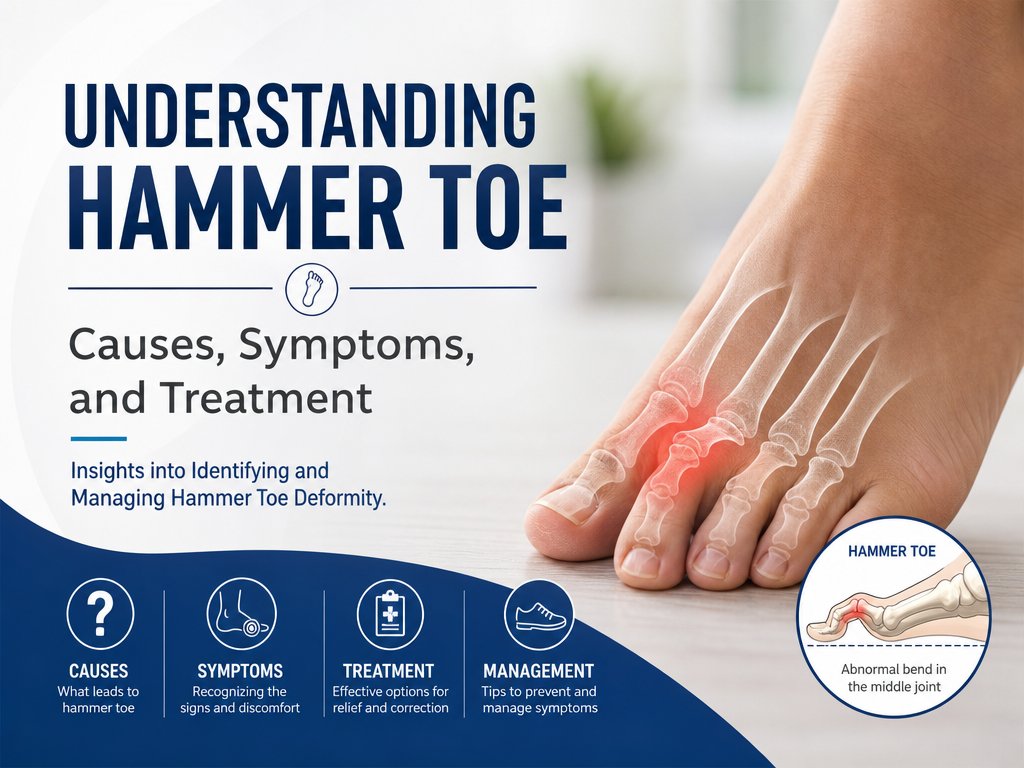
What is Hammer Toe?
A hammer toe is a common orthopedic condition where a toe bends downward instead of pointing forward, often affecting the second or third toe. This deformity can arise over time due to various factors such as arthritis or wearing tight, pointed shoes that do not provide adequate room for toe movement. Although congenital instances of hammer toe occur, it typically develops as one ages, particularly among those who frequently wear ill-fitting footwear. Understanding the nature and development of hammer toe is crucial for effective management and prevention. Awareness and proactive care can effectively reduce the risk of this condition.
Causes and Risk Factors
The deformity of hammer toe emerges when the middle joint of the toe becomes flexed downward. Several common causes include wearing shoes that are too tight or narrow, cramping the toes and leading to abnormal joint positioning. Additionally, spinal injuries, peripheral nerve damage, or conditions affecting the feet can trigger a downward curl of the toes. Wearing shoes that are too small, especially for extended periods, further exacerbates the likelihood of developing a hammer toe. These risk factors are often compounded by genetic predispositions, with some individuals being more naturally prone to foot conditions. Being aware of these factors can help in choosing proper footwear and reducing the risk.
Recognizing the Symptoms
Individuals with hammer toe often experience discomfort while walking or stretching the affected toe. Symptoms can vary significantly in intensity, from mild irritation to severe pain. Additional indicators can include corns or calluses on the top part of the affected toe due to friction against footwear. When symptoms persist, it’s crucial to seek medical advice to prevent further deterioration. Prompt consultation with an orthopedic surgeon or podiatrist is recommended if pain or persistent irritation ensues. An early diagnosis can enhance the effectiveness of treatment options, improving outcomes and reducing the chances of complications.
Treatment Options
Treatment depends on the severity of the condition. Corrective measures include wearing appropriately sized footwear, using toe pads or insoles to alleviate pressure, and resorting to over-the-counter cushions or medications to address bunions and corns. It is important to avoid popping any blisters, which may lead to infection and further complications. Doctors may also suggest physical therapy exercises to strengthen toe flexibility and prevent further joint stiffness. Consistent care and following medical advice can lead to better management of symptoms and a happier lifestyle.
In more severe cases, where mobility is significantly compromised, surgery may be necessary to realign tendons and joints, remove injured bone, and reposition the toe for proper alignment. This outpatient procedure facilitates a swift recovery, allowing patients to regain their daily activities without chronic pain. Post-operative care, including physical therapy, is vital for successful rehabilitation and ensures optimal results, minimizing future complications. Understanding the treatment options and following through with medical recommendations is key.
Prevention and Best Practices
To prevent hammer toe, it is crucial to wear shoes that fit well, providing plenty of room for all toes, with a focus on avoiding high heels higher than two inches, as they can increase toe pressure. Ensuring proper shoe fit and accommodating natural foot shape minimizes the risk of developing this painful condition. Regular foot exercises can also strengthen muscles and improve toe alignment. Early intervention upon suspecting or confirming the diagnosis of hammer toe can prevent additional complications, promoting a more comfortable lifestyle. Therefore, seek treatment as soon as possible if you notice symptoms related to hammer toe, as delaying can lead to worsening of the deformity and exacerbation of associated discomfort. Prioritizing foot health and being mindful of discomfort can go a long way in maintaining overall well-being and preventing hammer toe from impacting daily life. Regular check-ups and consultations with foot specialists can aid in early detection and comprehensive care.
Implementing these preventive measures can maintain good foot health and avoid unpleasant consequences. Adopting healthy foot practices as part of your daily routine enhances mobility and prevents unnecessary complications down the line. Taking these steps assists in addressing the early onset of any foot-related issues, making it easier to manage or prevent potential complications. Attention to detail in personal care not only enhances foot health but overall quality of life.