Introduction to Herpes
Herpes is caused by the herpes simplex virus (HSV), with two types: HSV-1 and HSV-2. These viruses have an incubation period between transmission and symptom emergence.
Herpes has two primary forms. HSV-1 primarily causes oral lesions (cold sores), while HSV-2 mainly results in genital sores. However, both types can cause sores in either location.
Incubation Period Details
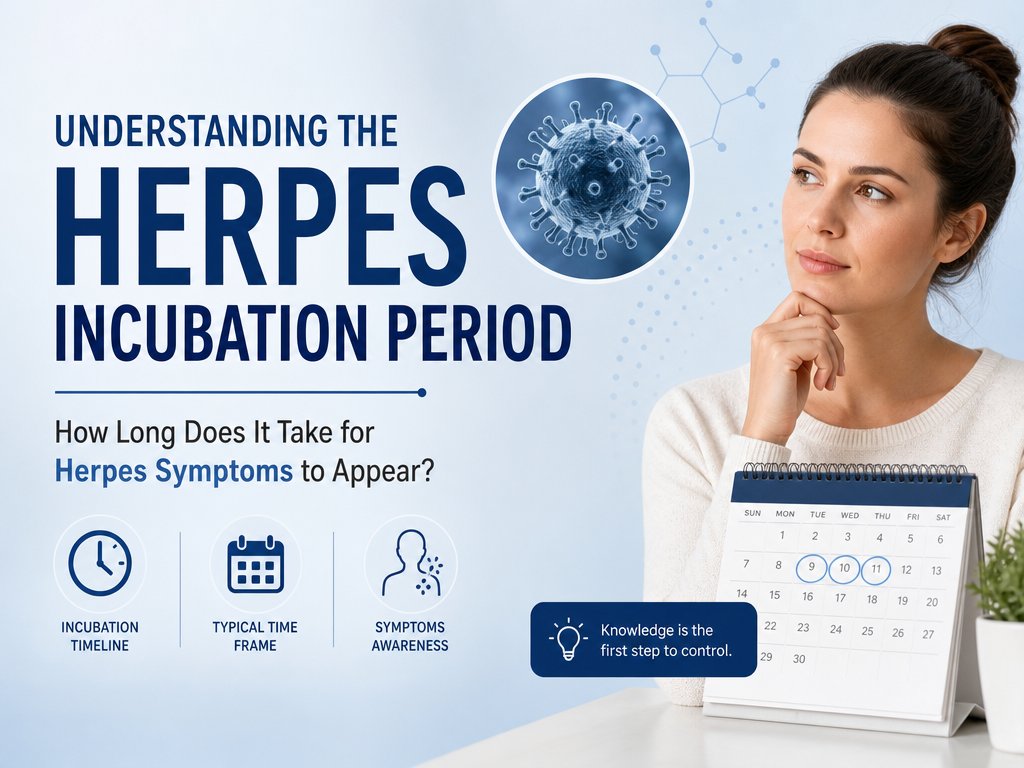
After contracting HSV, there’s typically an incubation period—the timeframe from infection to first symptoms. For both HSV-1 and HSV-2, this ranges from 2 to 12 days, with most seeing symptoms after 3 to 6 days.
During incubation, the virus exists in the body without visible infection signs, often spreading unknowingly as individuals may not realize they are infected.
Recognizing Symptoms
According to the Centers for Disease Control and Prevention, many with HSV experience symptoms so mild they go unnoticed or are mistaken for other skin conditions. Herpes may remain undetected for years.
Common symptoms include blisters that ulcerate, leaving painful sores and may itch. Fever, body aches, and swollen lymph nodes often accompany initial outbreaks. Recurrent episodes tend to be milder.
Herpes Stages
HSV alternates between a dormant phase, with few symptoms, and an outbreak phase with visible symptoms. On average, individuals may experience two to four annual outbreaks, though some may go years without any.
The frequency and severity of outbreaks vary significantly. Triggers for reactivation include stress, illness, or a weakened immune system.
Transmission During Dormancy
Once contracted, HSV can be transmitted even during dormancy without sores or symptoms. The transmission risk is lower but present, despite treatment.
It’s less likely for HSV to spread right after initial infection, making it difficult to know when the virus was contracted. Transmission often occurs from an asymptomatic partner who unknowingly carries HSV.
Managing Herpes
Herpes is incurable and remains in the body indefinitely. Transmission is possible even during dormancy. Consult your doctor about medications that can reduce transmission risk, but physical barriers are the most reliable preventive measure—these include avoiding contact during outbreaks and using condoms and dental dams during sexual activities.
Antiviral medications such as acyclovir, valacyclovir, and famciclovir help shorten outbreaks and reduce symptoms. They also lower transmission risk. Regular medical consultations aid in managing the condition.
Recognizing stressors and maintaining a healthy lifestyle may aid in reducing outbreak frequency. Open communication with partners about HSV status is crucial, promoting safer, informed decisions.