Understanding Overweight and Obesity Through BMI
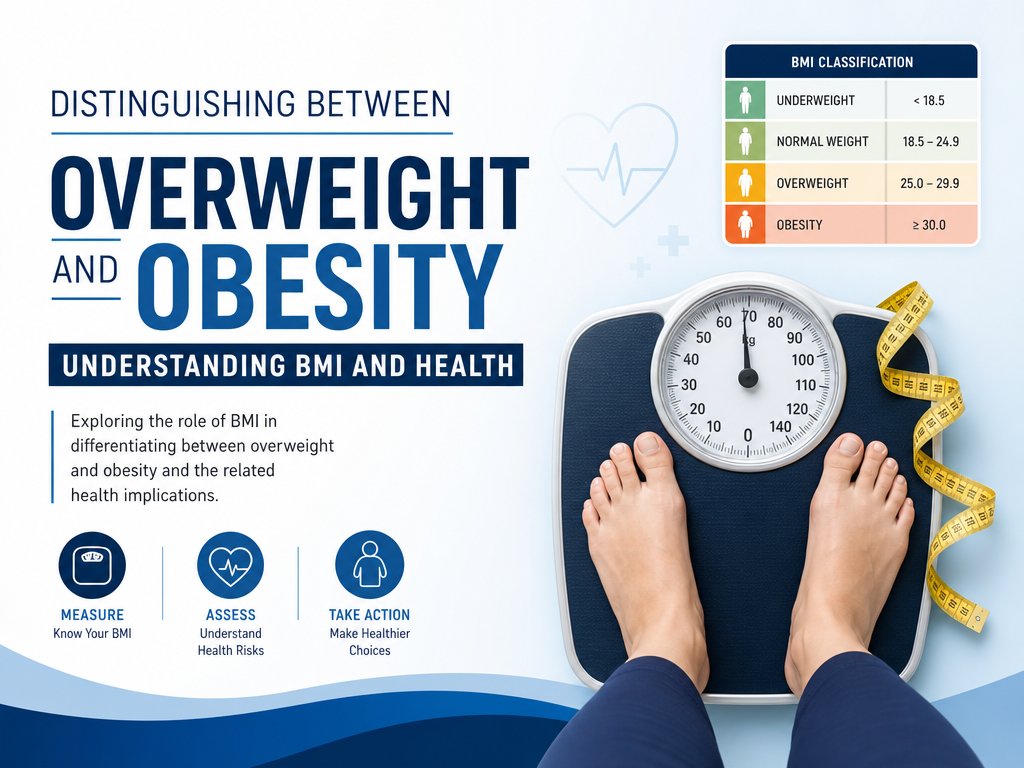
Healthcare professionals frequently turn to Body Mass Index (BMI) as a convenient tool to categorize individuals as overweight or obese. BMI is a numerical measure derived from a person’s height and weight, serving as a simplistic indicator of potential health issues related to body weight.
According to major health organizations, including the World Health Organization (WHO) and the Centers for Disease Control and Prevention (CDC), a BMI between 25 to less than 30 classifies someone as overweight. In contrast, a BMI of 30 or higher is generally considered indicative of obesity. These categorizations serve as benchmarks for assessing the risk of developing various health conditions associated with weight, such as heart diseases, stroke, and certain types of cancer.
Limitations and Criticisms of BMI
Despite its widespread use, BMI faces criticism for its limitations. It does not distinguish between muscle mass, fat content, and bone density. As a result, individuals with significant muscle mass, such as athletes, may be erroneously classified as obese when using BMI as the sole criterion.
Due to these limitations, experts recommend alternative measures for a more comprehensive understanding of an individual’s body composition. One such measurement is the body fat percentage (BFP), which may yield a more accurate assessment of obesity. Generally, a BFP of 30% or greater for women and 25% or more for men is considered a marker of obesity, although there is an ongoing debate concerning these benchmarks.
People advocating for this approach argue that considering BFP can provide a clearer picture of a person’s health, as it accounts for distinctions in tissue composition. Moreover, utilizing specific tools like bioelectrical impedance analysis or dual-energy X-ray absorptiometry can yield more precise and individualized results.
Inclusive Language in Medical Research
The terminology employed in health research often delineates strictly between “male” and “female” categories, inadvertently ignoring non-binary and transgender identities. Although specificity is critical in clinical settings, the exclusion of diverse gender identities in study populations may impact the validity and inclusivity of research findings. Progressive approaches now call for more inclusive language to ensure varied populations are adequately represented in medical research, acknowledging that these identities can significantly affect an individual’s health experience and risks.
Locally and globally, new initiatives are being launched to incorporate a broader spectrum of identities in research, which is foundational to developing insights that will meaningfully benefit everyone, irrespective of their gender identity. Efforts such as ensuring diverse participant demographics and considering gender-related factors in health studies are steps towards making healthcare research more inclusive and representative.
Health Risks and Misconceptions
Typically, being in the overweight or obese BMI categories is linked with elevated risks of poor health outcomes, such as cardiovascular disease and diabetes. However, not all individuals with a higher BMI necessarily face these health challenges. A detailed study conducted in 2014 suggested that 6% to 75% of individuals classified as having obesity might still be metabolically healthy, showing no signs of common metabolic disorders.
Conversely, individuals with normal or lower BMIs are not exempt from health conditions often associated with excess weight, highlighting the inadequacy of BMI as a singular health assessment metric. This underscores the importance of considering various factors in gauging health risks rather than relying solely on BMI.
Understanding that BMI is not an infallible measure is essential in driving the need for broader evaluations for health risks. Incorporating assessments of blood pressure, cholesterol levels, and more comprehensive metabolic screenings could prove more insightful in informed health care decisions.
Weight Bias and Health Disparities
The healthcare sector’s strong emphasis on weight can inadvertently cultivate stigma and misdiagnosis, leading to improper treatment plans. Such weight-centric bias might even dissuade individuals from seeking essential preventive healthcare services out of discomfort or fear of judgment.
Moreover, weight loss should not be viewed as a universal solution to health conditions. The relentless pressure to lose weight may foster unhealthy eating habits and mental distress, highlighting the need for physicians and healthcare providers to adopt a holistic approach when assessing health risks, factoring in elements beyond BMI. Consider attention to emotional and psychological factors, like stress and mental health, which often intertwine with physical health, is paramount.
Factors Influencing Health
Additional factors play crucial roles in influencing an individual’s health beyond just weight and BMI. These include family history, lifestyle choices (such as diet and physical activity), mental wellbeing, socio-economic status, and access to healthcare. Recognizing and integrating these aspects in health evaluations allows for more personalized and effective care strategies.
Understanding genetic, environmental, and behavioral aspects helps tailor healthcare interventions to better fit individual needs, potentially leading to more positive health outcomes. Socio-economic factors, like education and income level, also contribute critically, showing individuals’ access and approach to healthcare services, influencing how medical interventions are perceived and adopted.
Navigating Healthcare With Overweight and Obesity
Patients identified as overweight or obese may encounter significant challenges in healthcare environments due to prevailing biases and misconceptions. Nonetheless, regardless of weight, every individual deserves access to compassionate and equitable healthcare.
For those focusing on weight management, collaborating with professionals such as registered dietitians, endocrinologists, or bariatricians can be beneficial. These specialists can offer personalized guidance, though it’s crucial to acknowledge that weight loss does not automatically mitigate all health risks. Therefore, medical consultations should be tailored to the individual’s unique health context and needs, emphasizing a patient-centered approach.
This approach should incorporate personalized health goals and plans that respect the patient’s values and cultural contexts, encouraging a supportive care environment that prioritizes overall well-being rather than purely focusing on weight changes. Furthermore, fostering open communication with healthcare providers and ensuring that treatment plans are adaptable based on ongoing feedback can enhance the individual’s healthcare experience, promote adherence, and result in improved health outcomes.