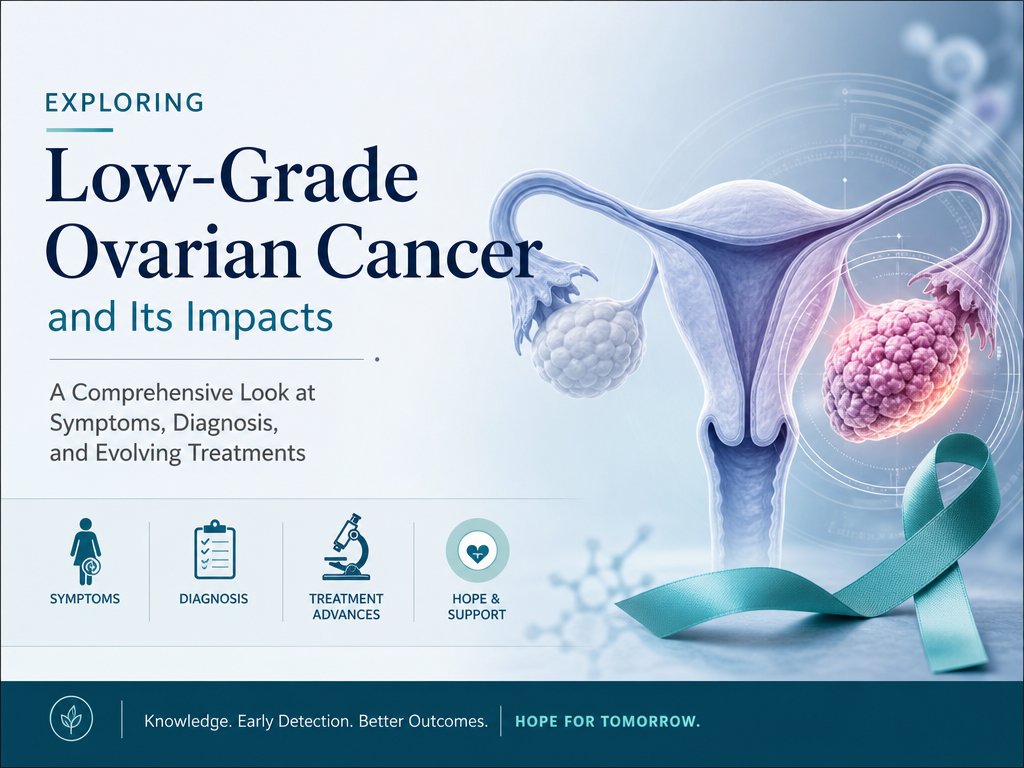
Introduction to Low-Grade Ovarian Cancer
Low-grade ovarian cancer is considered an uncommon type of ovarian cancer that is generally most treatable when detected at an early stage. It tends to disproportionately affect younger individuals and poses particular challenges due to its notable resistance to standard chemotherapy approaches. Understanding its unique characteristics and progression is crucial for developing effective management and tailored treatment strategies.
Characteristics and Early Stages
This specific type of cancer is characterized by its notably slow growth, often not presenting with noticeable symptoms until it reaches later stages. When symptoms do arise, they commonly mirror those of other types of ovarian cancer, such as bloating, abdominal discomfort, and changes in urinary habits. Defined as a distinct cancer variant in 2004, low-grade ovarian cancer’s behavior, growth rate, and treatment responses differentiate it significantly from other, more common ovarian cancers. It typically grows on ovarian surfaces and is invasive in nature, often leading to a delayed diagnosis.
Low-grade ovarian cancer primarily arises from the epithelial cells covering the ovary. These cells, when they become cancerous, tend to be less aggressive than their high-grade counterparts. This type of ovarian cancer is sometimes part of a spectrum of diseases known as serous ovarian cancer, differentiated by how the cancer cells appear under a microscope. With low-grade serous tumors, the cells tend to form numerous small glands and cysts, which are often small, adding complexity to detection and staging.
Challenges Faced by Diverse Groups
Ovarian cancer is often perceived primarily through the lens of women’s health. However, this perspective can inadvertently alienate transgender men, nonbinary individuals, and intersex people, thereby creating barriers to necessary care and early intervention. Treatments may also be exceedingly complex for these diverse groups, warranting a need for tailored healthcare approaches where gender transition surgeries might intersect with cancer treatment plans. These situations require sensitive handling and professional expertise to ensure optimal care.
It is vital that healthcare providers receive training to manage these particular needs sensitively. Engaging with professional organizations and advocacy groups can be beneficial for continuous learning and providing the best patient-centered care. Educational initiatives such as workshops or seminars that include diverse patient experiences can facilitate better understanding and create an inclusive care environment.
Symptoms and Diagnosis
In its initial stages, low-grade ovarian cancer is often symptomless, making its early detection challenging. However, when symptoms do eventually present themselves, they tend to align with traditional ovarian cancer symptoms such as pelvic pain, bloating, and a premature feeling of fullness even after eating small amounts. The disease affects different demographics, with a lifetime risk assessed at approximately 1.2%. Notably, it’s more prevalent among younger adults, who face unique challenges in balancing intensive treatment with personal life milestones, such as career development or family planning.
The diagnostic process can be multifaceted, often requiring a combination of pelvic examinations, imaging tests like ultrasounds or CT scans, and blood tests measuring tumor markers such as CA125. It can sometimes involve an exploratory surgery to obtain tissue samples for histological examination. Genetic testing may also be considered for those with a family history of cancer, as they may have an elevated risk due to hereditary factors.
Stages of Low-Grade Ovarian Cancer
The progression of the cancer is categorized into four stages, with the disease often going undetected until it reaches stage 2 or 3. The cellular composition of the tumors is markedly distinct from high-grade variants, leading to their slow progression and inherent resistance to conventional chemotherapy regimens. Due to its rarity, specific screening tests are not widely developed or available. Diagnosis typically involves an intricate combination of imaging studies, blood tests, and biopsy to accurately determine the cancer stage and inform treatment strategies.
Stage 1 represents the early phase where the cancer is confined to the ovaries, offering the best chance for successful treatment outcomes. As it progresses to Stage 2 and spreads to nearby pelvic organs, the prognosis becomes more complex. Stage 3 cancer extends beyond the pelvis to the abdominal cavity, while Stage 4 indicates that the cancer has spread to more distant parts of the body like the liver or lungs, presenting a significant therapeutic challenge.
Treatment Options
Initial treatment usually involves surgery, with specific procedures differing depending on tumor location and fertility considerations. Achieving complete removal often requires the excision of the ovaries, fallopian tubes, and womb, which can significantly impact future fertility. However, innovative research offers renewed hope, with drugs like Trametinib emerging as promising candidates for inhibiting tumor growth and improving overall survival rates. Such developments provide a new line of attack against low-grade ovarian cancers that show resistance to traditional treatments.
Fertility preservation strategies can sometimes be explored, particularly for younger patients who wish to maintain the possibility of having children in the future. Offering a multidisciplinary care approach ensures patients receive comprehensive advice on both oncological and fertility options. Additionally, targeted therapies and hormone therapy have presented alternative treatment routes, focusing on slowing cancer progression while minimizing side effects.
Future Developments
Despite the daunting treatment challenges posed by low-grade ovarian cancer, ongoing scientific efforts to discover and develop new therapies signal a brighter and more promising future. Trametinib, for instance, is a treatment that specifically targets this cancer and shows promising outcomes in early studies, potentially altering the landscape of long-term management strategies. Continued research, focusing on tailored treatment protocols, aims to mitigate relapse rates and improve survival well beyond the current average of 9 years, offering a beacon of hope for both patients and clinicians alike.
Rigorous clinical trials remain crucial in testing emerging therapies’ efficacy and safety. In addition to Trametinib, other combinations of MEK inhibitors and hormone therapy are under investigation, broadening the potential for patient-specific regimens. Collaboration among research institutions worldwide is vital in facilitating the rapid advancement of understanding and treating low-grade ovarian cancer.
Conclusion and Support Resources
Low-grade ovarian cancer remains a rare but particularly complex condition. Its treatment involves a comprehensive, multifaceted approach that includes surgery and the integration of novel therapies, which are deemed critical in striving to improve patient outcomes. As ongoing advancements continue to unfold in this field, outcomes for those affected are likely to see significant improvement, although it requires continuous support from healthcare communities and advanced research efforts.
For those diagnosed, stress and confusion are common, underscoring the essential importance of support networks and resources readily available both online and through medical institutions. Counseling and patient advocacy groups play a critical role by providing necessary emotional support and practical assistance during both treatment and recovery periods.
While the journey may be challenging, new research frontiers and innovative treatment options present a hopeful outlook for better management and care of this distinctive type of cancer. Access to updated information and robust support systems empowers patients to make informed decisions regarding their health, thus contributing to an improved quality of life and more favorable long-term outcomes.
Support resources are critical, such as those offered by organizations like the National Ovarian Cancer Coalition and Cancer Support Community, which provide educational materials, survivor stories, and forums for sharing experiences. These networks not only foster a sense of community but also offer guidance on navigating complex medical decisions, assuring patients they are not alone in their battle against cancer.