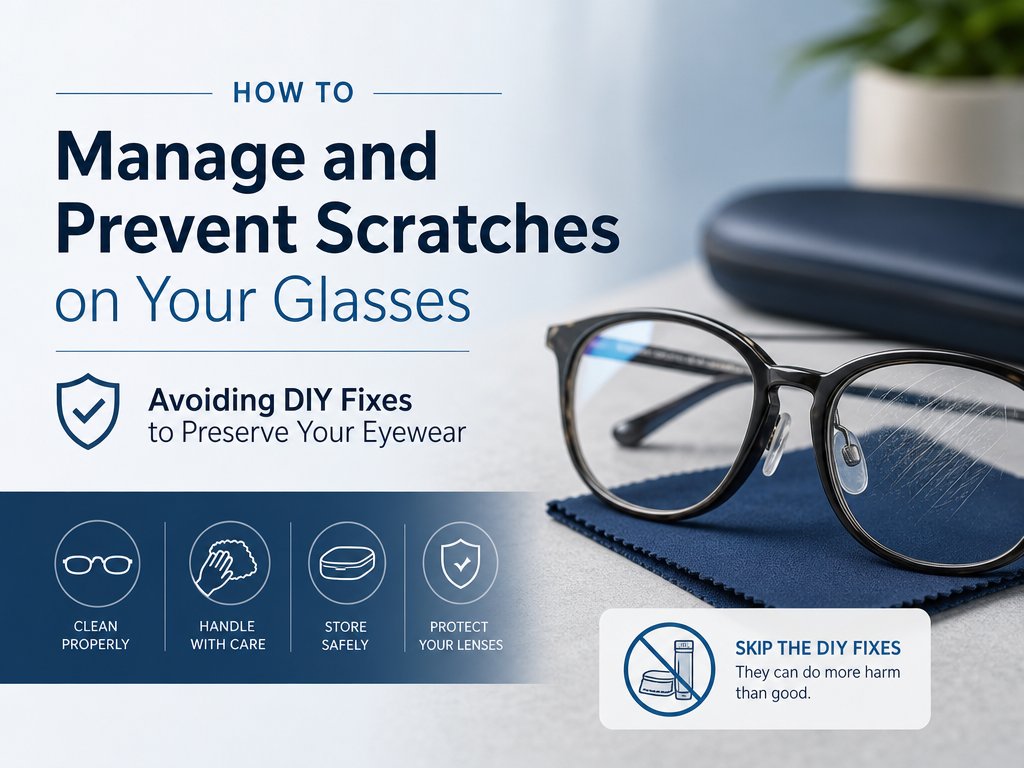
Understanding Eye Glasses Scratches
For those who regularly rely on glasses for clear vision, encountering a scratch on the lens can feel just as bothersome as having a speck of dust or dirt in your eye. This is because a simple smudge or streak can quickly become embedded into the lens, causing an obstruction to your vision. Even the smallest scratch or blemish has the potential to impact sight, resulting in strain or discomfort.
Challenges with Common Solutions
You might feel compelled to fix scratches on your glasses as soon as they appear. However, most popular do-it-yourself solutions, such as using baking soda or car wax, tend to be ineffective and can even exacerbate the damage. These household remedies often fail to solve the actual problem and may make matters worse by leaving additional residue or damaging coatings. Such solutions can further erode lens material, diminishing their function.
Proper Cleaning Practices
Before resorting to any scratch-removal tactics, it is crucial to clean your glasses thoroughly yet gently. Make use of a microfiber cloth that is specifically designed for cleaning eyeglasses, applying minimal pressure in addition to an eyeglass cleaner or a solution of mild dish soap and water. Proper cleaning ensures that no additional abrasives are introduced to the lens surface, which could exacerbate any existing scratches.
Why Glass Lenses Are Less Common
Glass lenses are seldom used in contemporary eyewear because they present more safety concerns compared to plastic lenses. If a glass lens shatters upon impact, it poses a significant risk of injury due to its fragments. Besides safety concerns, glass lenses also bear the disadvantage of being heavier, which can compromise the overall comfort of wearing glasses for prolonged periods. This can also make them less appealing for day-to-day wear.
Dealing with Scratches
Optometrist Ashley Katsikos suggests avoiding interference with small scratches that do not substantially impact your vision. It is more beneficial to concentrate on preventive measures rather than attempting powerless quick fixes. Focus on avoiding further damage rather than risking additional harm through ineffective solutions. Patience and proper care often yield better results than temporary remedies.
Time for a Replacement
If you find that scratches begin to obstruct your vision or lead to discomfort such as headaches, it is wise to consider replacing your lenses. Katsikos cautions against using household substances like baking soda or toothpaste as they have the potential to further emulsify or damage your lenses, possibly resulting in irreversible damage. In such cases, consulting with a professional for a lens replacement is recommended.
Preventive Measures
To minimize the risk of scratches, it is advisable to avoid using household cleaning products or paper towels on lenses, as they can be abrasive. If a scratch does form, resist the urge to rub it with your fingers or clothing. Instead, when you arrive home, clean your lenses gently to prevent exacerbating the scratch. Regular maintenance and careful handling can significantly extend the life of your lenses.
Considering Protective Coatings
Adding a scratch-resistant coating to lenses can protect against potential scratches but must be applied at the time of purchase; it cannot be added after scratches have formed. Often, this protective measure is supported by a 1-year warranty for replacements in the event any issues occur. The minimal initial investment in a protective coating can save much trouble down the line, providing you with longer-lasting and clearer lens performance, giving peace of mind to the wearer.
Conclusion
In conclusion, taking steps to prevent scratches primarily involves adhering to proper care techniques and steering clear of ineffective DIY solutions. Should scratches begin to significantly impair your vision or interfere with daily activities, it is crucial to seek advice from an eye care professional. They can provide guidance in determining the best possible solutions to ensure optimal optical health and performance, helping to maintain both your vision and your glasses for years to come.