The Impact of Roe v. Wade Overturn
The United States Supreme Court’s landmark decision to overturn Roe v. Wade has profoundly transformed the national landscape of reproductive rights, effectively ending 50 years of constitutionally guaranteed access to abortion. This seismic legal shift now presents a reality where countless individuals may face potential criminalization for obtaining or seeking abortions in various states, leading to substantial implications for the health, autonomy, and safety of pregnant individuals across the country.
For many, this decision is more than just a change in law; it represents a profound loss of legal control over their bodies, fundamentally affecting their sense of personal and communal safety. The change in legislation resonates on numerous levels, sparking widespread emotional responses such as grief, profound sadness, anger, and a deep-seated fear of further erosions of bodily autonomy and personal rights.
Understanding Somatic Responses to Trauma
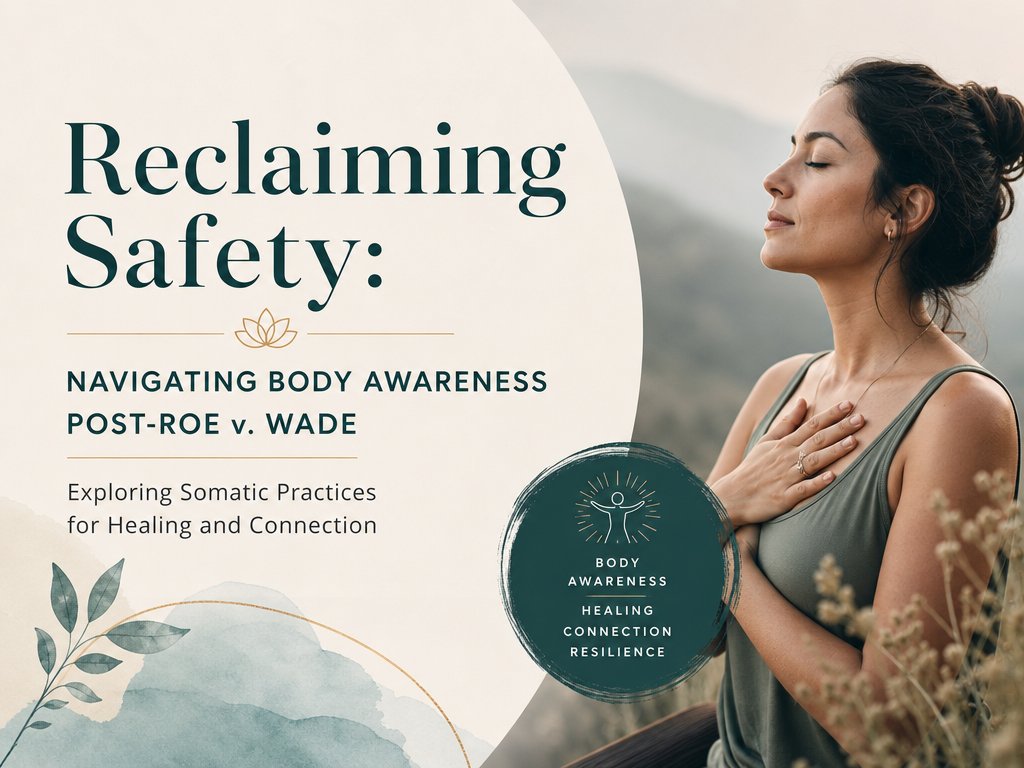
Experts in somatic healing point out that the loss of fundamental human rights is likely to manifest in various physical and emotional defense mechanisms, such as the fight-or-flight response or dissociation. Although these responses are protective by nature, they can disrupt daily life and well-being. Somatic practices present an approach to acknowledging and processing these emotions while gently guiding the body away from a protective stance and towards healing.
Deborah Bagg, a yoga teacher and mental health counselor, connects the experience of safety to somatic responses, highlighting numerous physical reactions such as increased heart rates and elevated stress hormones. These intense reactions underscore the shared, community-wide trauma following the court’s ruling. The collective nature of the experience amplifies the emotional toll and underscores the need for communal healing efforts.
Community Healing through Somatic Practices
Collective healing is paramount as individual traumas are intrinsically linked within communities. Deborah Bagg underscores the importance of community in facilitating healing, advocating for practices such as yoga, breathwork, and dance to help individuals release stress and alleviate tension.
Somatic practices encourage embodying feelings of safety, which becomes crucial when navigating through chaotic and distressing times, as suggested by somatic practitioner Michelle Shlafman. Techniques like shaking, grounding, and structured breathwork serve to release stored stress and restore balance, providing a sense of equilibrium and control. This structured approach to confronting and managing trauma offers individuals a chance to regain a sense of equilibrium that might have felt lost in the wake of such dramatic legal changes.
Harnessing Fear and Anger for Change
The current socio-political climate calls for proactive measures that are inspired by emotions often perceived as negative. Avigail Lev emphasizes that fear and anxiety, instead of subduing them, should be transformed into motivators for meaningful change. Lev indicates that anxiety is not only a reaction to soothe but a prompt for action and engagement with issues demanding attention.
“This is the time to get angry, stand up, and fight to reclaim rights,” Lev asserts, conveying that channeling emotions collectively can result in impactful social and political movements. By recognizing these emotions as valid and useful, they become tools for advocacy and change, rather than obstacles. It is through channeling our emotional responses that movements find strength and momentum, often leading to substantial societal progress and the rectification of injustices that affect so many.
Conclusion: Healing as a Pathway to Empowerment
In confronting the post-Roe v. Wade reality, engaging with somatic practices presents individuals with a route back to bodily safety and empowerment. Exploring therapeutic methods offers not only solace but also a renewed drive toward change, turning emotions such as fear and anger into powerful catalysts for reclaiming rights and advocating for themselves and others.
Understanding the importance of tending to our bodies—as an intrinsic human right—can transform personal and collective grief into empowered and concerted action. Acknowledging and embracing emotions associated with trauma allows individuals to move forward with resilience and purpose, fostering personal growth and social progress. This holistic approach to healing posits that the integration of mind and body in processing trauma can lead to a more profound understanding of self and society. By acknowledging our shared vulnerabilities, we foster a community of support, enabling each member to stand with strength and courage against the erosion of rights and freedom.
The necessity for emotional and somatic healing becomes apparent as communities grapple with the reverberations of this monumental decision. Healing practices not only mitigate trauma but also embolden individuals to take part in shaping a future where rights and personal autonomy are respected and upheld. This holistic pursuit of healing, grounded in both individual and collective action, serves to empower communities and fortify the resolve to advocate for reproductive rights and personal autonomy in the face of ongoing challenges.