Understanding Eosinophilic Esophagitis
Eosinophilic esophagitis (EoE) is a chronic immune disorder affecting the esophagus. Known triggers include food allergies, seasonal allergies, and acid reflux, leading to an overreaction by the immune system. This results in a buildup of eosinophils—white blood cells—in the esophagus, causing inflammation, swallowing difficulties, and potential food impaction.
Mental Health Impacts of EoE
Living with EoE often leads to food-related anxiety and social avoidance, particularly in situations involving meals. Studies reveal a higher prevalence of anxiety and depression among EoE sufferers compared to the general population. These mental health challenges can impact both personal and professional social interactions.
Strategies to Support Mental Health
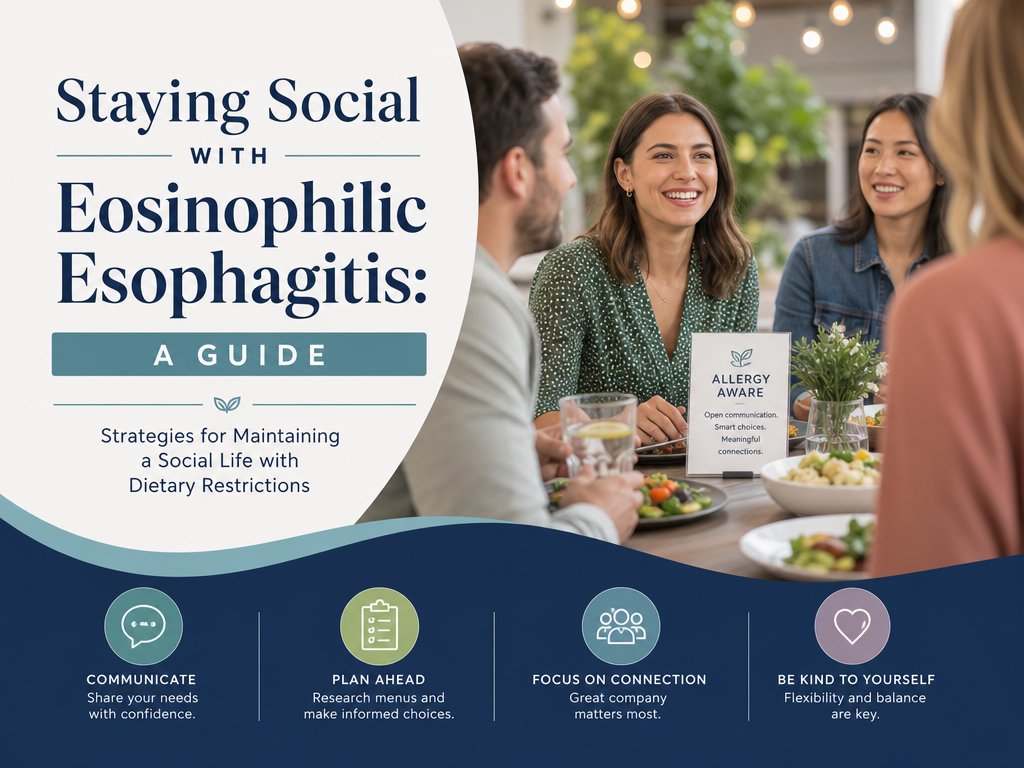
Managing EoE effectively involves dietary changes and possibly medication to mitigate symptoms. It’s important to proactively manage social situations to reduce anxiety and maintain mental well-being. Here are some tips:
– **Communicate Openly:** Discuss your condition with friends, family, and even restaurant staff. Use tools like chef cards for dietary restrictions.
– **Plan Ahead:** Contact dining venues beforehand to arrange suitable food options or carry your safe foods to social events.
– **Seek Support:** Engaging with support groups like the EoE Adult Group on Facebook or APFED’s EOS Connections can provide community and understanding.
– **Opt for Non-Food Activities:** Focus on socializing through activities that don’t center around food to minimize stress.
Living with EoE: A Positive Approach
Although EoE is a lifelong condition with no cure, combining dietary management with social strategies can significantly improve quality of life. Don’t let EoE restrict your social life—adopt these strategies to enjoy interactions without compromising your health.