Introduction to Cataracts
Cataracts occur when the eye’s lens becomes cloudy, causing a gradual decline in vision. Though anyone can be affected, cataracts are most prevalent among older adults. They can also occur from birth or be triggered by factors such as injuries or medical conditions like diabetes.
Symptoms and Impact on Daily Life
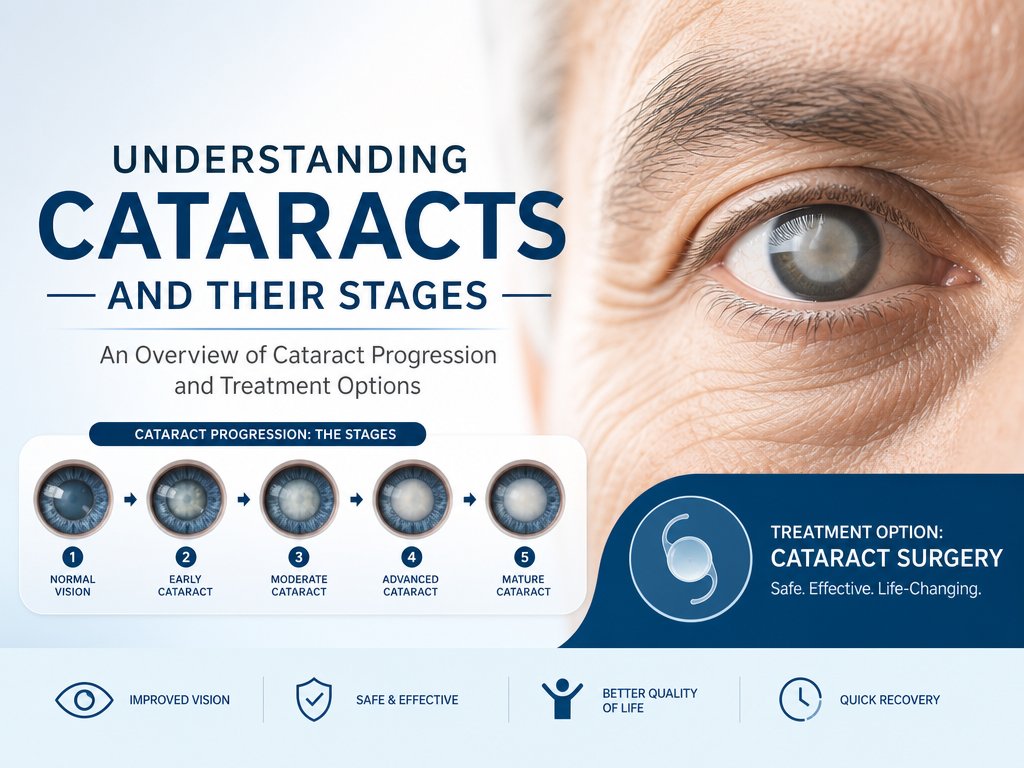
As they progress, cataracts can result in symptoms such as blurred vision and increased sensitivity to light, making routine activities such as reading and driving more difficult. While there are various types of cataracts, they all progress through four distinct stages.
Stages of Cataracts
Early Stage
In the early stage of cataracts, the lens begins to develop small cloudy areas. During this stage, individuals may not experience significant symptoms, although some minor changes in vision can occur.
Immature Stage
This stage is marked by partial cloudiness of the lens, allowing some light to reach the retina. Vision changes might be noticeable, but complete blindness is not expected.
Mature Stage
At this advanced stage, the lens becomes fully dense and opaque, significantly impairing vision. Daily life activities become challenging.
Hypermature Stage
This is the most severe stage of cataracts, where the lens may start to harden and shrink, increasing risks of complications such as inflammation and elevated eye pressure.
Treatment Options
The approach to treating cataracts depends on the stage and severity. In the early and immature stages, management of symptoms is crucial. Eye doctors might suggest stronger eyeglasses or advise protective measures like sunglasses to minimize glare. Brighter lighting can also improve visibility at home or work.
As cataracts mature, surgery becomes essential, involving removal of the cloudy lens and insertion of an artificial one. This outpatient surgery is generally safe and takes about an hour. Hypermature cataracts demand immediate surgery due to the potential for complications.
Conclusion
Cataracts develop progressively and can severely affect vision if untreated. Regular eye exams can facilitate early detection and intervention. While the treatment varies depending on the stage, surgery remains the primary solution for advanced stages, ensuring significant improvement in vision and quality of life.