Introduction to Lung Cancer Types
Cancer of the lungs is mainly categorized into small cell lung cancer (SCLC) and non-small cell lung cancer (NSCLC). A key subtype within NSCLC is large cell lung cancer (LCLC). Each type has distinguishing characteristics important for diagnosis and treatment.
Differences in Growth and Diagnosis
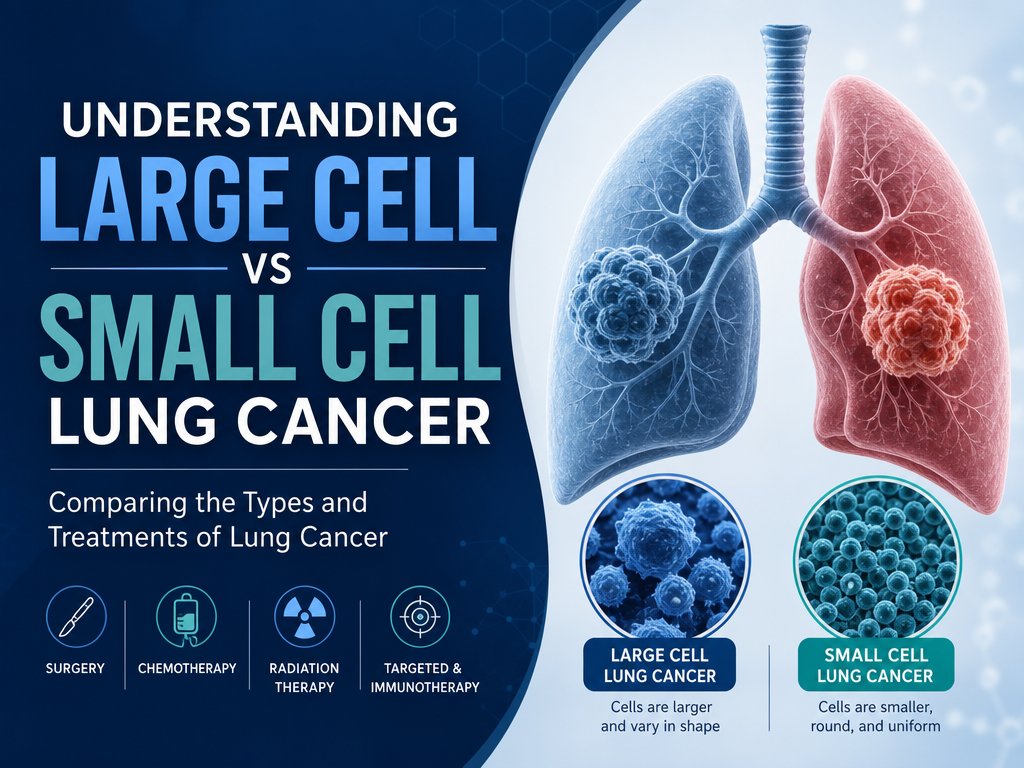
Though SCLC and LCLC have similarities, they differ in growth rate and microscopic appearance. SCLC typically grows aggressively and rapidly, often appearing flatter under a microscope. Conversely, LCLC cells appear larger, crucial for diagnosis and understanding disease progression.
Treatment Variations
Treatment approaches vary significantly between cancer types. SCLC is primarily treated with chemotherapy, often combined with radiation. In contrast, LCLC treatment might include surgery if the cancer is localized. Additional treatments can include targeted therapies or immunotherapy based on the patient’s health and case specifics.
Shared Symptoms and Risk Factors
Both types of lung cancer can present similar symptoms and risk factors: chronic cough, chest pain, smoking, environmental exposures, and genetics. Early detection can lead to more successful treatment, emphasizing regular check-ups, particularly for those at high risk.
Detection and Confirmation
If lung cancer is suspected due to persistent symptoms or risk factors, doctors may use imaging tests like X-rays, MRIs, or CT scans for further investigation. If these suggest cancer, a biopsy determines the specific cancer type, essential for developing an effective treatment plan.