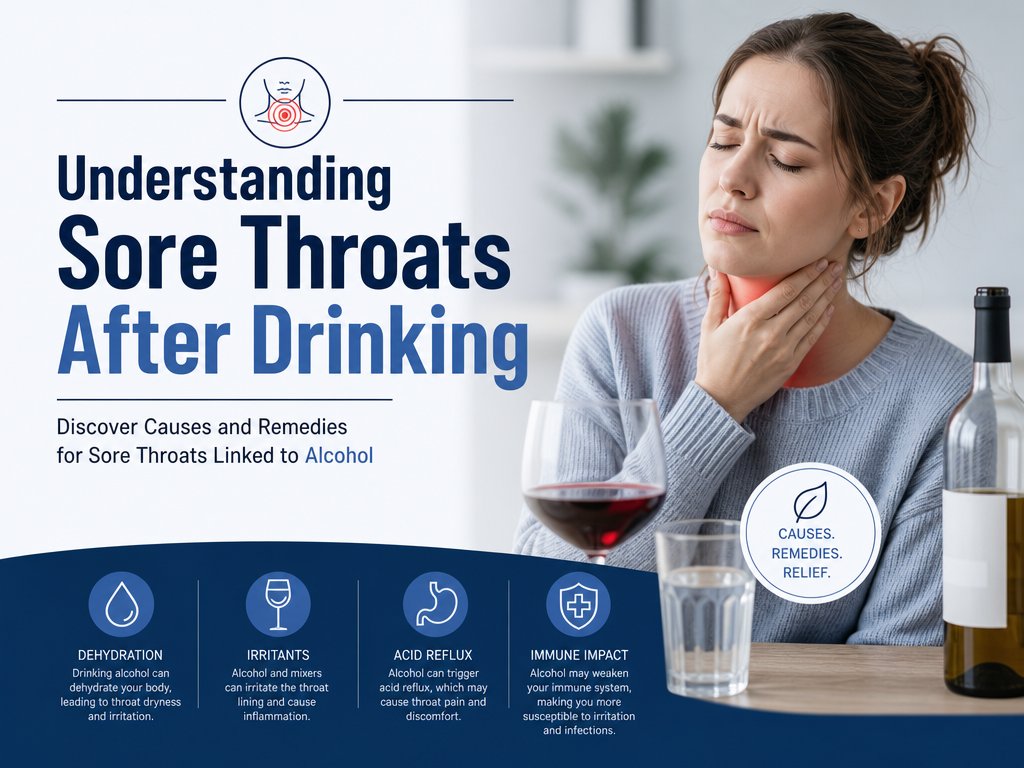
Introduction
Waking up with a sore throat and a hoarse voice after an evening of drinking is an experience many have faced at some point. This uncomfortable sensation can feel troubling and may persist for a day or more, largely depending on the degree of vocal strain and dehydration encountered. Fortunately, various remedies such as warm drinks with honey, soothing throat lozenges, and salt water rinses can help alleviate symptoms and promote healing. For those experiencing such discomfort frequently, understanding the underlying causes can aid in taking effective preventive measures.
Causes of Sore Throat After Drinking
Dehydration and Dryness
Alcohol consumption can dehydrate your body significantly and dry out your mouth and throat. This dehydration stems from alcohol inhibiting the production of a hormone called vasopressin, which is vital in helping your body retain water. When compounded with talking or shouting over loud music, especially in crowded spaces like bars or parties, this can lead to throat inflammation. Such inflammation can make it harder to speak comfortably, adding to the discomfort of vocal fatigue and soreness.
Diuretic Effect of Alcohol
As a diuretic, alcohol increases urination and consequently water loss. This can potentially cause not just dehydration, but also symptoms like nausea and lightheadedness. The diuretic effect can lead to considerable fluid loss, exacerbating dehydration and eventually resulting in hoarseness and throat pain. It becomes crucial to replenish lost fluids to prevent these adverse effects, emphasizing the importance of conscious hydration practices before, during, and after alcohol consumption.
Remedies for Sore Throat
Hydration and Electrolyte Balance
Ensuring adequate hydration by drinking enough water and consuming foods rich in electrolytes, such as leafy greens, avocados, bananas, and spinach, is essential to counteract alcohol’s dehydrating effects. Sports drinks or nutrient-rich soups can also help replenish lost electrolytes, supporting the balance of essential minerals necessary for proper muscle and nerve functions in the body. Additionally, herbal teas and coconut water can provide hydration while being gentle on the throat.
Rest and Recovery
Rest plays a crucial role in healing the throat and vocal cords, allowing them to effectively recover from any strain or irritation caused by excessive shouting or singing. Alcohol, however, can affect sleep quality and add to fatigue, despite having a full night’s sleep. Hence, ensuring restful, quality sleep is vital for recovery and essential for maintaining good overall health. Using blackout curtains, earplugs, or white noise machines can improve sleep conditions when regular rest is disrupted.
Home Remedies
Gargling with saltwater and using soothing lozenges or cough drops to stimulate saliva production can help alleviate throat discomfort. Herbal teas, especially those with anti-inflammatory properties like green or ginger tea, can also be beneficial. Furthermore, honey is extensively praised for its soothing effects on sore throats, offering both relief and a sweet flavor. Adding a spoonful of honey to warm water or tea can provide comfort while aiding the healing process.
Over-the-Counter Options
Over-the-counter medications like NSAIDs, including ibuprofen, aspirin, or naproxen, can effectively reduce inflammation and soothe the headaches often associated with hangovers. It is, however, vital to adhere to recommended dosages to avoid any potential side effects or adverse reactions. Consulting with a healthcare provider is advisable if there is any doubt about medication interactions or pre-existing conditions.
Preventive Measures
Moderation in Alcohol Consumption
The most straightforward way to prevent hangovers and subsequent sore throats is by either abstaining from alcohol or consuming it in moderation. Staying hydrated before, during, and after drinking, alongside avoiding loud and noisy environments, can also aid in reducing the risk of developing a sore throat the next day. Limiting intake to a responsible amount ensures that the body can efficiently process alcohol without extreme strain.
Protecting Vocal Cords
Overusing your voice by yelling or singing loudly can strain your vocal cords, enhancing the effects of hoarseness or discomfort. Dry environments further escalate these risks, so it is advisable to limit prolonged vocal activities in such conditions. Implementing a humidifier into living spaces can add needed moisture to the air, effectively preventing throat dryness. Moreover, practicing vocal warm-ups or cooldown exercises can help maintain vocal health.
Immune System Considerations
Alcohol consumption can weaken the immune system, increasing susceptibility to infections that might cause sore throats. Moreover, conditions like GERD can flare up post-drinking, with sore throat being a common symptom. Strengthening your immune system through a balanced diet rich in vitamins and essential nutrients can attenuate these risks and enhance overall health. Foods rich in vitamin C, such as citrus fruits and vegetables, bolster immunity and aid in recovery.
Conclusion
Despite the challenges, managing and preventing a hangover-related sore throat is possible. Key strategies include maintaining proper hydration, drinking in moderation, and effectively using home remedies or over-the-counter medications. Awareness and proactive health practices can significantly reduce the discomfort associated with alcohol-related throat issues, promoting a healthier and more enjoyable social life. By focusing on well-being, individuals can enjoy social events without compromising their health in the long run.