Introduction to Defibrillators and Pacemakers
Defibrillators and pacemakers are crucial medical devices specially designed to assist individuals who suffer from arrhythmia—a condition characterized by irregular, too fast, or too slow heartbeats. These devices serve an essential role in managing the heart’s electrical signals and ensuring the heart functions properly, providing stability and mitigating risks associated with abnormal heart rhythms. As technology advances, the potential of these devices to improve patient outcomes continues to expand, including their ability to collect vital data on heart health and history, which can aid physicians in customizing individual treatment plans.
Understanding Defibrillators
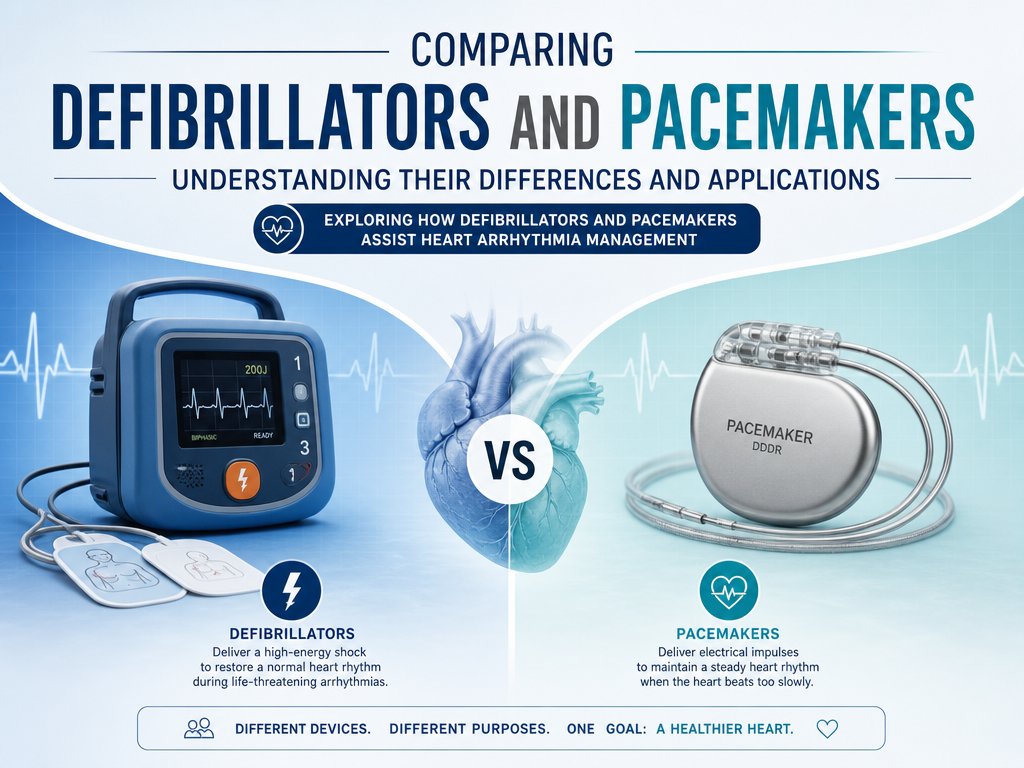
Defibrillators are used to deliver electrical shocks to the heart in order to restore a normal rhythm. They are instrumental in addressing sudden cardiac arrest situations, which is a leading cause of death if not promptly treated. Without rapid intervention, these conditions can result in severe cardiac damage or death; thus, defibrillators are critical in emergency healthcare settings. The ability to promptly correct malfunctions of heart rhythms distinguishes defibrillators as lifesaving tools that can be administered by medical professionals and, in many cases, trained laypersons in community settings.
Types and Functions of Defibrillators
There are several types of defibrillators, each tailored to different patient needs. ICDs (implantable cardioverter defibrillators) are among the most prevalent. These devices are equipped with sensors that detect heart rhythm changes and decide when to deliver low or high-energy shocks accordingly. AEDs (automated external defibrillators) are another type, designed to be user-friendly for non-medical personnel and available in public spaces to provide immediate assistance during cardiac emergencies. Both types have specific purposes, but they share the common goal of restoring heart functionality during critical situations.
Defibrillators keep track of the heart’s activity, providing valuable data that doctors can utilize to assess the functionality of the heart and potential arrhythmias. The implantation process for a defibrillator involves minor surgery, which is typically performed under local anesthesia. This procedure ensures that the device is securely positioned and optimized for the patient’s condition, functioning seamlessly with the individual’s physiological needs. Post-operative care and regular follow-up visits are crucial to ensure that the device performs optimally and adapts to the patient’s changing cardiac requirements over time.
Risks and Benefits
While the defibrillator implantation procedure carries some risks, such as the potential for incorrect shock delivery or infection, ICDs have been shown to significantly improve survival rates for patients at risk of cardiac events. Research involving prolonged monitoring has supported these findings, highlighting the benefits that these devices offer to suitable candidates. They help prevent cardiac arrest by acting as an ongoing monitor and responder, ready to correct potentially life-threatening heart rhythms. The integration of remote monitoring capabilities into modern defibrillators has further boosted their efficacy, allowing healthcare providers to detect anomalies and adjust treatment plans proactively.
Analyzing Pacemakers
Pacemakers are devices that ensure the heart beats at a regular pace by using steady, low-energy electric shocks to maintain a consistent rhythm. They are essential for patients who experience bradycardia, where the heart beats too slowly, or when there are frequent pauses in the heartbeat. They work continuously to provide a steady rhythmic pace, thereby preventing symptoms like dizziness or fainting. With the continuous evolution of medical technology, pacemakers have become more sophisticated, offering improved interaction with the body’s natural rhythms for enhanced therapeutic results.
Pacemaker Types and Applications
Historically, traditional pacemakers have involved wires connecting the device to the heart. However, advancements have led to the development of wireless pacemakers, which offer more flexibility and fewer potential complications. These devices effectively manage conditions resulting from an irregular or slowed heartbeat. By analyzing the heart’s electrical signals, pacemakers can adjust to the body’s demands, increasing the pacing rate during physical activity and decreasing it during rest. Such adaptability ensures that patients can maintain an active lifestyle while benefiting from the protective oversight of these crucial devices.
Pacemakers can be placed independently, but sometimes they are combined with ICD capabilities, particularly for patients experiencing heart failure. During the implantation, doctors use imaging tools to ensure accurate placement, addressing abnormalities and minimizing risks effectively. The procedure entails precise placement of electrodes within heart chambers to allow the pacemaker to deliver specific impulses where needed. This technology not only prevents heart rhythm disturbances but, by integrating defibrillation technology within the same device, can also provide immediate response to life-threatening arrhythmic events.
Complications and Improvements
Complications from pacemaker implants can include device malfunction or patient discomfort, but these occurrences are generally rare. Research and patient monitoring indicate that the majority of recipients experience significant improvements in their condition following implantation. Technological advancements have led to smaller, more efficient devices that enhance therapeutic outcomes, minimize implant-related problems, and extend life expectancy. Continuous innovation in the field is anticipated to further streamline device function, improve patient comfort, and expand the database of heart rhythm information that enhances patient management and personalized care strategies.
Conclusion: The Role of Medical Device Implants
Defibrillators and pacemakers play an indispensable role in enhancing the quality of life for patients with arrhythmia by preventing sudden cardiac events. Through consultation with healthcare providers, patients can ensure that they receive the most suitable device for their specific condition, paving the way for improved outcomes and better overall heart health. These devices, coupled with advances in medical technology and vigilant monitoring, continue to be pivotal in managing cardiac conditions, offering not just an extension of life but an enhancement of life quality. This integration of cutting-edge biotechnology into cardiac care symbolizes a leap forward in therapeutic approaches to complex cardiovascular challenges, effectively reducing morbidity associated with arrhythmic episodes and heart failure. With the growing reliance on these medical devices, the future looks promising for patients seeking interventions that align seamlessly with their lifestyles and personal health goals, emphasizing the importance and efficacy of personalized medicine.