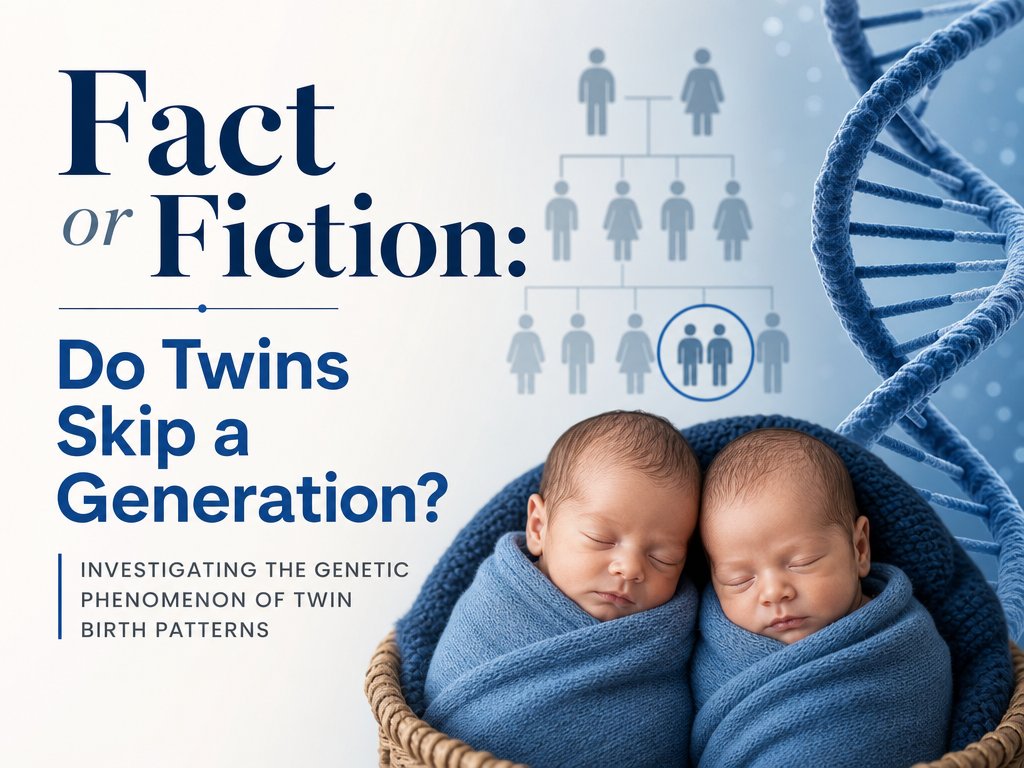
The Fascination with Twins in Families
Many individuals, upon announcing a pregnancy, may hear comments about twins running in their family or wonder about their likelihood of having twins. The desire for twins or the curiosity about their occurrence often leads to questions like: Do twins really skip a generation? This topic has intrigued many, prompting deep dives into familial patterns and scientific studies from different fields.
Understanding the interplay between genetics and twin pregnancy can provide insights into your chances of experiencing this unique blessing, potentially clarifying age-old beliefs about familial patterns leading to twins. The mystery surrounding twin occurrences continues to fascinate scientists and expectant families alike, driving ongoing research and meaningful discussions on the subject.
Genetic Factors Influencing Twin Births
Fraternal Twins and Family History
Non-identical, or fraternal twins, are more likely to appear in families. This trend relates to genetic factors that may cause ovulating individuals to release multiple eggs, a phenomenon known as hyperovulation. While hyperovulation can occur spontaneously, it often signals a hereditary trait passed down through generations. This trait might be more prevalent in some families, offering a glimpse into why twins seem more frequent in such lineages.
Research continues to explore these genetic nuances, though no specific gene responsible for hyperovulation has been isolated to date. Despite this, familial patterns provide some predictive insight into the occurrence of fraternal twins, hinting at still undiscovered mechanisms that nature employs. Understanding these mechanisms might open up a deeper appreciation of nature’s way of perpetuating the occurrence of twins.
Monozygotic Twins: A Possible Genetic Link
Identical (monozygotic) twins were once considered randomly occurring and not influenced by genetics. However, recent studies suggest that having monozygotic twins may also have a genetic component, although this remains less common than fraternal twinning. This emerging theory invites further exploration into the familial traits influencing this phenomenon and the varying factors that might play a role in its occurrence.
Typically, identical twins occur in about 3 or 4 out of every 1,000 births, presenting a fascinating junction between randomness and family genetics. This discovery challenges existing perceptions and beckons more profound inquiry into how identical twins form, potentially altering what is known in modern genetics. The possible genetic link in monozygotic twinning remains a captivating research area, driving innovative studies.
Debunking the Generational Skip Myth
The notion that twins skip a generation is more myth than fact. While men in the family may not contribute directly to hyperovulation, their daughters might inherit the predisposition to release multiple eggs through genetic inheritance, giving the illusion of a generational skip. The myth persists partly due to these complex genetic interactions, where a detailed look at both maternal and paternal family history is essential for understanding.
Further analysis reveals that myths like these often arise from misconceptions or oversimplification of genetic patterns. By closely examining familial lines, it becomes evident how such myths might be perpetuated through anecdotal observations over time. In debunking these myths, people gain a clearer understanding of how genetics play a nuanced role in the continuation of specific traits.
Modern Influences on Twin Pregnancies
Today’s medical advancements, such as fertility treatments, increase the likelihood of multiple births. Many treatments assist by stimulating the production of multiple eggs, thereby increasing the possibility of fraternal twins. This medical intervention has become a significant factor in modern childbirths involving twins, differing vastly from natural occurrences and reshaping expectations about twin births.
In vitro fertilization (IVF) also plays a significant role in multiple births, often involving the implantation of multiple embryos to enhance the chances of pregnancy, which can result in twins. These scientific advancements underline the changing landscape of twin births, adding layers beyond mere genetic predisposition, and marking a new era where medical progress intertwines with natural processes, contributing to the acceleration of twin birthing rates in recent times.
Understanding the Odds of Twin Births
Though having twins may seem rare — approximately 3% of pregnancies in the U.S. result in multiples — factors such as age, genetics, and fertility treatments can enhance your chances. Even if your family history lacks twins, these elements might increase your odds beyond the national average, showcasing the multi-faceted nature of twin occurrences.
For those anticipating the unique challenges and joys of a twin pregnancy, it’s crucial to engage closely with healthcare providers for specialized care, providing you with information and strategies to manage the intricacies involved. Proactive healthcare can ensure a healthy experience for both the parent and the twins, ensuring that you’re adequately prepared for the journey ahead. With the right support, parents can look forward to embracing the unique bond that twins share, celebrating both the similarities and individuality each twin brings into the world. Proper understanding and preparedness can make this journey not just manageable, but truly unforgettable.