Understanding Skin Spots: Freckles and Moles
Freckles and moles are common skin spots that come in various shapes, sizes, and colors. While the vast majority are benign, it remains important to be vigilant. Particularly, any sudden changes in their appearance should prompt a visit to a knowledgeable healthcare professional. Familiarity with your skin’s particular features can greatly contribute to the early detection of potential issues, allowing for timely medical intervention and peace of mind.
Freckles
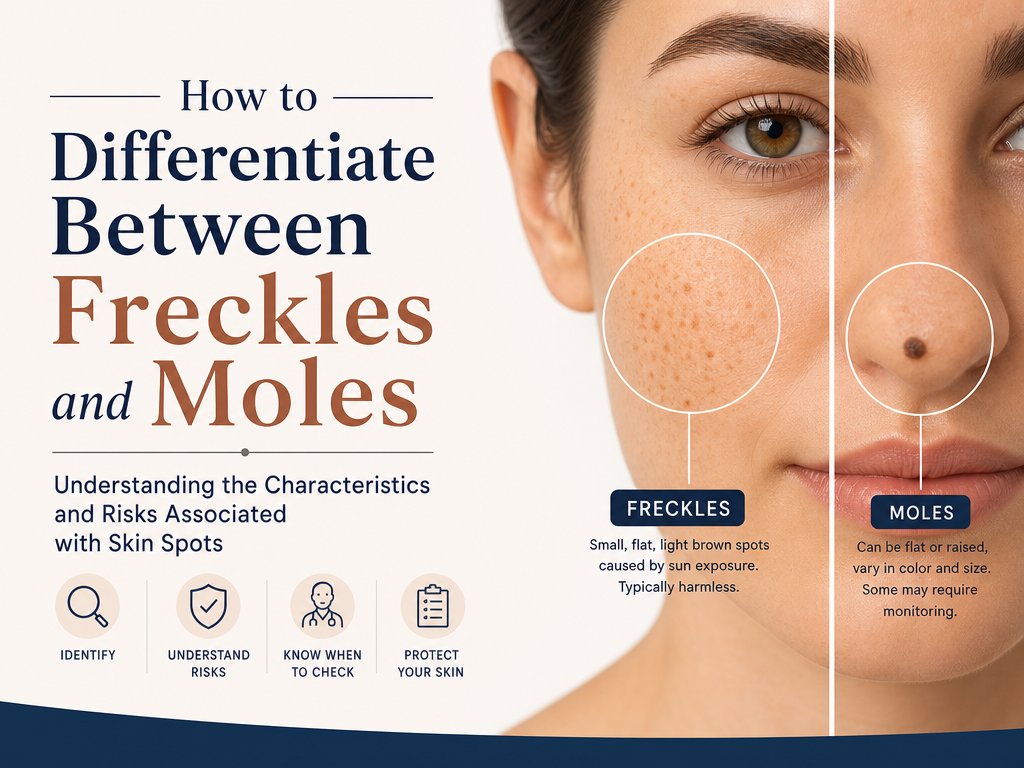
Freckles, also known as ephelides, are often caused by sun exposure or genetic factors. They are small, flat spots of skin discoloration and their colors can vary depending on a person’s skin tone, ranging from tan to black. Typically harmless in nature, these freckles might fade over time or during seasons with less sun exposure, such as winter. These spots are more noticeable in those with lighter skin tones and may appear more prominently after repeated sun exposure, particularly during the summer months when the sun’s rays are strongest.
Freckles form due to the skin’s exposure to ultraviolet (UV) light from the sun. People with fair skin often develop freckles more easily because their skin has less melanin, the pigment responsible for darker skin tones. Interestingly, those who have a genetic predisposition to freckles tend to have them spread more evenly over their skin, rather than clustering in specific areas.
Moles
Moles, medically termed nevi, can be either flat or raised, and often first appear during childhood. They can range in color from flesh-toned to dark brown and may vary considerably in size. Moles often undergo changes as you age, due to various factors, including hormone levels and environmental influences. While most moles are innocuous and pose no risk, some may be an indication of skin cancer, especially if they change significantly in size, shape, or color over time. Keeping an eye on these changes is crucial for your skin’s health.
The appearance of moles is sometimes influenced by hormonal changes, such as those occurring during puberty or pregnancy. Some moles may, over time, raise concerns if they change unusually, which is why paying attention to their evolution is pivotal. It’s worth noting that while some people are born with congenital moles, others develop them throughout their life, and certain moles can even fade or disappear altogether.
Recognizing Potential Risks
Freckles do not transform into cancerous growths. However, certain moles might be early signs of melanoma or other types of skin cancer. Paying close attention to any unusual changes in your moles is crucial for early detection and can lead to successful treatment. Early intervention can prevent further complications and improve health outcomes, emphasizing the importance of monitoring these skin features.
ABCDEs of Melanoma
To track the warning signs of melanoma, use the ABCDE rule:
- Asymmetry: One half of the mole does not match the other in terms of shape and symmetry.
- Border: The edges are irregular, ragged, or blurred, rather than smooth and well-defined.
- Color: The color is not uniform; it may include various shades of brown, black, pink, red, white, or even hints of blue.
- Diameter: The spot is larger than 6 millimeters across (about the size of a standard pencil eraser), although some melanomas can be smaller.
- Evolution: The mole is undergoing changes in size, shape, or color, which can indicate potential health issues.
Recognizing these signs can significantly aid in the early detection of melanoma, allowing for timely medical intervention to address this serious health issue.
When to Consult a Doctor
If any skin spot concerns you—particularly a new or changing mole—consult a dermatologist swiftly. Early detection and diagnosis of potential skin cancer can significantly increase the success rate of the treatment. Prompt professional assessment and any needed intervention can lead to more effective management of skin health, helping to ensure that you receive the best possible care and outcomes.
Regular Check-Ups
Regular dermatologist visits are strongly recommended, especially for individuals over the age of 30 or those with many moles or a family history of skin cancer. These check-ups are vital for timely and comprehensive skin evaluations. Frequent skin assessments can identify any potential problem areas early and guide appropriate interventions, thereby helping to manage your overall skin health and detect any issues at an early, treatable stage.
Moreover, dermatologists can offer valuable advice on the best ways to protect your skin from the sun, including the use of broad-spectrum sunscreens, wearing protective clothing, and avoiding peak sun exposure times. This advice is especially pertinent for those at higher risk of skin cancer.
In conclusion, understanding the differences between freckles and moles and vigilantly monitoring any changes can substantially aid in effective skin health management. A professional evaluation is strongly advised for any suspicious changes or new developments to ensure overall well-being. Empowering yourself with knowledge about your skin can lead to more proactive health decisions and a better awareness of when medical advice is needed.