Introduction to Skin Grafts
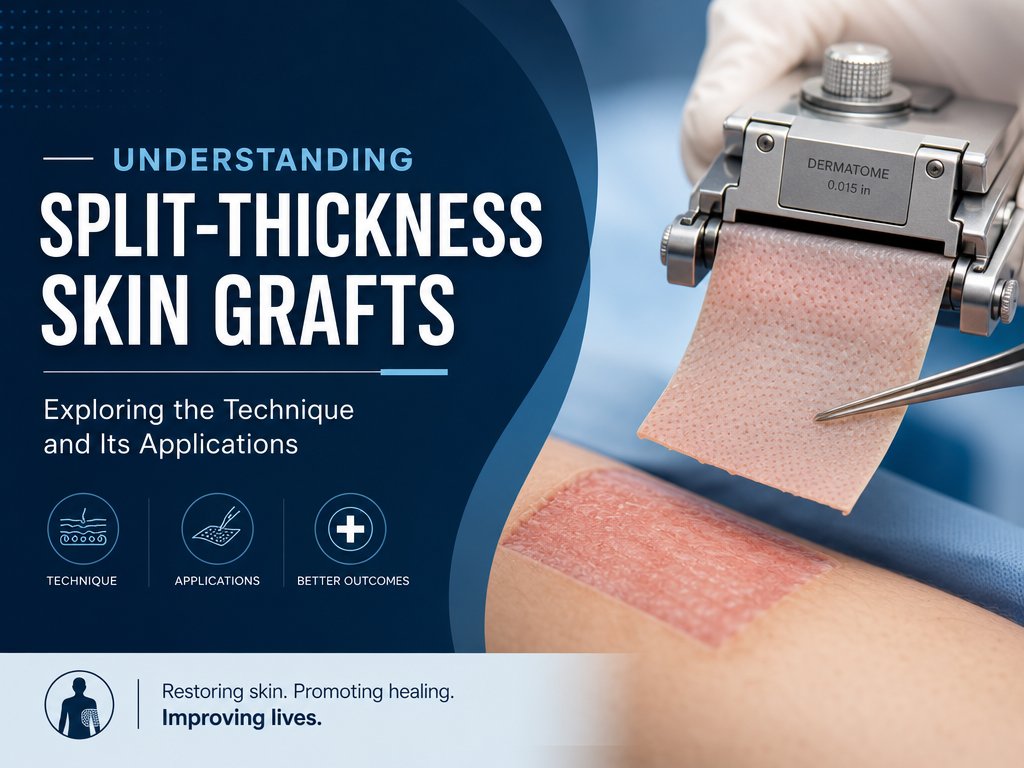
Skin grafting is a medical procedure used to treat areas of damaged, broken, or missing skin. This process involves the transplantation of skin from one part of a patient’s body to another. A split-thickness skin graft involves harvesting a thin layer of healthy skin from a donor site on the patient’s body to repair the injured or damaged area. This technique is commonly used because it aids in the replacement, repair, and regeneration of essential skin structures while promoting a faster healing process.
Split-Thickness Skin Graft Explained
Split-thickness grafts, also known as partial-thickness grafts, incorporate only the top layers of skin, namely the epidermis and a portion of the dermis. They are typically used for injuries involving burns, ulcers, or surgical wounds. The donor skin usually comes from the patient to ensure compatibility and reduce the risk of rejection. This type of graft is favored due to its comparatively rapid healing time and the capacity to cover wide areas of the body, making it a versatile and effective choice for various types of skin injuries.
Procedure and Recovery
Preparing the Graft
To prepare a split-thickness graft, a thin layer of skin is shaved using a precision instrument, often from quickly healing areas of the body such as the thigh or buttocks. The harvested skin is sometimes meshed or perforated to cover larger areas and to promote healing by allowing fluids to escape and new cells to grow through the mesh openings. This technique not only maximizes the coverage area but also facilitates the healing of both the donor and recipient sites.
Surgical Process
The graft procedure is performed under local or general anesthesia, depending on the size and location of the graft. During the surgery, the surgeon meticulously disinfects the injury site to prevent infection, and the graft is positioned carefully and secured with stitches or staples before being covered with a protective dressing. This protection helps maintain a sterile environment and supports the graft in adhering properly to the new site.
Donor Site Healing
The healing process for the donor site may cause discomfort and requires careful bandage changes to avoid infection and promote cleanliness. Generally, the skin takes approximately two weeks to regenerate completely at the donor site. Patients should maintain the surgical dressing intact for 5 to 7 days to allow proper graft adherence and initial healing. The donor site might experience some temporary redness, irritation, and mild tenderness during those initial days, but these symptoms typically subside as the area heals.
Post-Operative Care and Complications
Patients may need to avoid certain activities that could strain the graft site for up to a month. Physical therapy might be recommended to ensure mobility is maintained during recovery. Full graft healing can take up to a year, during which the graft may undergo changes in color and texture. Potential complications like contracture, where the graft contracts over time causing limited movement, could occur, especially if the graft is placed over a joint. In such cases, additional surgical interventions might be necessary to enhance flexibility and function.
Advancements in Skin Grafting
Traditionally, donor skin was exclusively sourced from the patient. However, medical advancements now allow for the integration of donor or animal skin, and even synthetic tissue, which significantly expands treatment options for patients lacking sufficient healthy skin for grafting. These innovations in skin grafting science have revolutionized opportunities for treating extensive skin damages, providing new solutions for complex cases where conventional methods were previously unsuccessful.
Bioengineered skin substitutes and cultured epithelial autografts are among the breakthrough innovations that expand the scope of treatment. They offer solutions particularly useful for patients with limited skin availability or those who need extensive coverage. Moreover, these advanced materials are crafted to mimic the natural properties of skin, providing structural support and promoting enhanced tissue regeneration. Another development is the use of dermal matrices, which act as scaffolding to support cell growth and integration, aiding in quicker and more efficient healing.
Conclusion: The Success of Split-Thickness Grafts
Most split-thickness skin grafts are successfully implemented, resulting in functional and aesthetic regeneration of the injured skin. However, some cases may require additional intervention if initial attempts at graft adherence do not meet expectations. Despite potential challenges, these innovative techniques offer essential solutions for individuals with significant skin injuries, broadening the horizon of treatment possibilities and enhancing the quality of life for many patients dealing with complicated skin conditions and wound healing situations.
As technology continues to advance, the field of skin grafting will likely further evolve, introducing new methodologies and technologies for even better outcomes. With ongoing research in biomaterials and regenerative medicine, future skin grafting techniques may bring even more innovative options, potentially reducing recovery times and enhancing the likelihood of successful graft integration and function. Collaborative efforts among researchers, healthcare professionals, and technology developers will play a crucial role in shaping these advancements, ensuring that patients receive cutting-edge care adaptable to a wide range of needs and conditions.