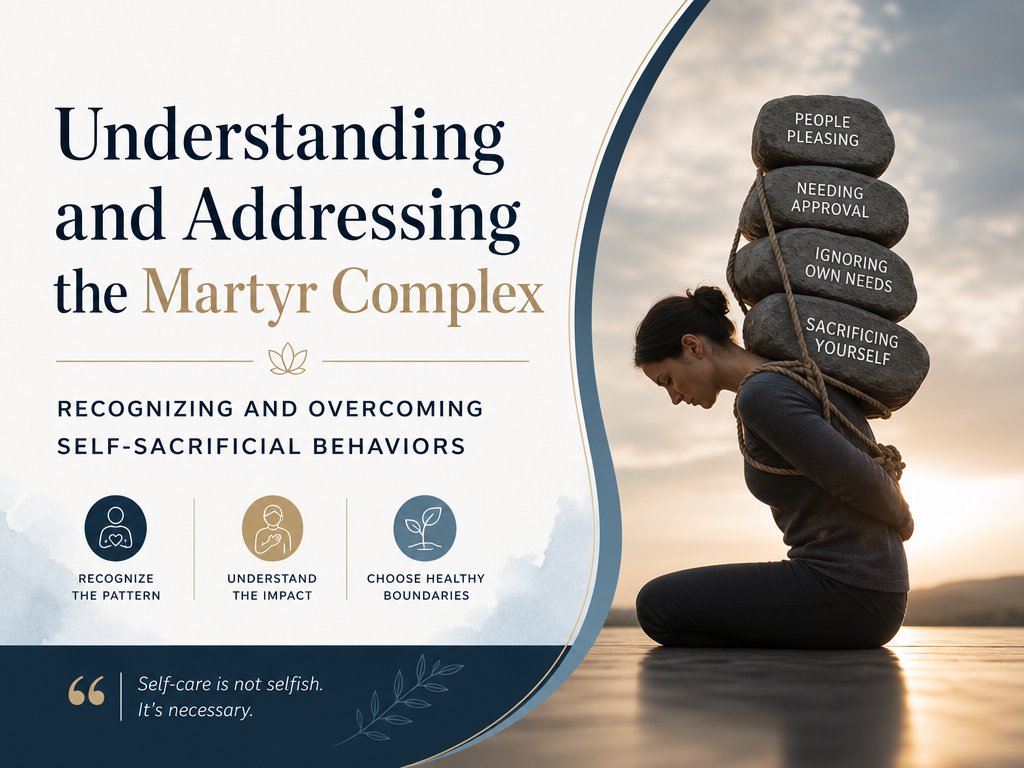
Introduction to the Martyr Complex
Traditionally, a martyr was someone who made great, often life-risking sacrifices for a cause they believed in passionately. In a contemporary context, the term has broadened to describe individuals who seem to habitually suffer or endure hardships, often exaggerating their difficulties to garner sympathy, validation, or attention from others. This mindset, commonly referred to as a martyr complex, can deeply affect both personal and social interactions, leading to strained relationships and self-imposed hardships that might otherwise be avoidable. Such individuals often find themselves in a cycle of perpetual self-sacrifice, believing it to be a demonstration of virtue or moral superiority. However, this cycle can become a significant barrier to achieving personal happiness, peace, and fulfillment. Moreover, this perspective can subtly influence one’s perception of worth and contribution to external and internal experiences.
Martyr Complex vs. Victim Mentality
While both a martyr complex and a victim mentality involve feelings of suffering and perceived helplessness, they present distinct behaviors and mindsets. Individuals who possess a victim mentality tend to feel unjustly targeted by life’s challenges and believe that they are at the mercy of external forces, blaming others or their circumstances for their misfortunes. They often dwell on the past and harbor resentment towards those they perceive as having wronged them. Conversely, those with a martyr complex tend to actively seek out distressing situations or endure them without necessity. They may, on an unconscious level, believe that their suffering makes them more virtuous or valuable, actively sacrificing their own needs and well-being, which can lead to chronic resentment and a pervasive sense of powerlessness. These contrasting mindsets can have profound effects on the individual’s interaction with the world, often dictating their approach to obstacles and challenges. The internal dialogue within a person with a martyr complex frequently revolves around themes of self-worth that ties their personal sacrifices to their value in society.
Signs of a Martyr Complex
If you find yourself frequently taking on tasks out of a sense of duty, even if it means compromising your own needs, and feeling resentful or taken for granted in the aftermath, you may be displaying martyr tendencies. Additional signs include consistently engaging in unsatisfying or toxic relationships without making changes, a persistent sense of being unappreciated despite one’s efforts, feeling overwhelmed by responsibilities that are willingly taken on, and a habitual reluctance to express your own feelings and needs for fear of upsetting others. These patterns often lead to emotional exhaustion and an inability to establish and maintain healthy relational dynamics. Over time, these behaviors can result in a cycle where the individual’s identity becomes closely tied to their role as a self-sacrificing figure, making it difficult to break free from the reinforcing patterns of behavior. Consequently, individuals with a martyr complex may find themselves in a constant state of internal conflict, where their quest for recognition and worth through sacrifice undercuts their need for genuine connection and self-care.
The Impact of a Martyr Complex on Life
This mindset has far-reaching consequences, affecting not only personal relationships but also one’s mental and emotional well-being. Martyr tendencies impede effective communication, resulting in unresolved conflicts, long-term resentment, and a failure to prioritize personal needs. Consequently, individuals with a martyr complex often find themselves feeling isolated, misunderstood, and undervalued, despite their persistent efforts to please others. The physical effects of a prolonged martyr complex can include chronic stress, fatigue, and even burnout, as individuals fail to place self-care at the forefront of their lives. This enduring pattern of self-neglect further alienates the individual from beneficial, nurturing relationships and environments. Additionally, the lack of balance created by the martyr complex can lead to professional and social setbacks, as the energy invested in pleasing others detracts from personal growth and exploration. This cycle can lead to prolonged periods of dissatisfaction and a perceived lack of achievement in both personal and professional realms.
Addressing the Martyr Complex
Improving Communication and Boundaries
To overcome martyr tendencies, it is imperative to improve communication and establish firmer personal boundaries. This involves the ability to articulate personal needs clearly and assertively. By embracing the notion of healthy assertiveness, individuals can learn to express their needs without feeling guilt or remorse. Learning to say no without guilt or fear of judgment is crucial, as it prevents the accumulation of unnecessary resentment. Establishing these healthy boundaries simplifies interactions and empowers individuals to take control of their emotional and physical health. It marks the beginning of a more balanced and equitable dynamic in relationships and encourages mutual respect and understanding. The implementation of these boundaries not only enhances relationships but also nurtures the individual’s sense of autonomy and empowerment, thus fostering a more sustainable and enriching interaction with others.
Seeking Professional Help
Professional help, such as counseling or therapy, can be instrumental in identifying and addressing the roots of a martyr complex. Through therapeutic intervention, individuals can explore underlying causes, such as past trauma or ingrained belief systems, that have contributed to the development of this mindset. A therapist can help individuals recognize these tendencies and understand how they may have developed over time. Through therapy, individuals can learn strategies for changing these self-sabotaging patterns, enabling them to develop healthier coping mechanisms. Additionally, holistic approaches, such as mindfulness practices, can be integrated into the therapeutic process to encourage a more grounded and present-focused mentality. Professional support can be incredibly beneficial in developing healthier mental habits, fostering improved communication skills, and enhancing overall well-being. It often leads to greater self-awareness, increased self-esteem, and more fulfilling and balanced life experiences. Moreover, the shift in perspective gained through professional help can enable individuals to redefine their value system, emphasizing personal joy and contribution over perceived duties and sacrifice.
Supporting Others with Martyr Tendencies
If someone you care about exhibits frequent martyr behaviors, it’s important to approach the situation with understanding and compassion, while also ensuring that your own boundaries are respected. Recognizing that such behaviors may arise from deeply ingrained cultural or psychological factors is key to empathy. A supportive approach involves encouraging the individual to express their true feelings and to seek help if needed. Engaging in open dialogue about their needs and struggles without judgment can foster a supportive environment conducive to change. By actively listening and providing guidance, you can help them detach their self-worth from their perceived sacrifices. Yet, it is equally important to ensure that your interactions don’t inadvertently reinforce the martyr behavior by validating the underlying belief that their worth is tied to their sacrifices. Constructive support can empower these individuals to pursue self-care actively and embrace healthier relationships, free from unhealthy patterns of self-neglect and obligation. Through empathetic communication, you can play a crucial role in their journey towards recognizing their inherent value independent of external validation or sacrifice.
Conclusion
The martyr complex, if left unexamined, can create substantial challenges across various aspects of life, including personal relationships, professional engagements, and internal well-being. However, by understanding its patterns and impacts, and by actively addressing them through improved communication strategies, firm boundaries, and therapeutic support, individuals can work towards a more balanced and fulfilling life. Personal growth and improved relationships become achievable goals as the weight of unnecessary self-sacrifice is lifted, allowing for more authentic expressions of love, happiness, and personal fulfillment. The journey towards overcoming a martyr complex requires patience and a willingness to explore internal beliefs and behaviors critically. Ultimately, embracing one’s value independent of sacrifices can lead to a significantly more enriching and connected existence. By cultivating an environment where needs and desires are acknowledged and valued, individuals can transform how they engage with the world around them, enabling relationships built on mutual understanding and respect. This re-engineering of personal perception and external interactions holds the potential to redefine one’s narrative, turning self-imposed burdens into opportunities for growth and connection.