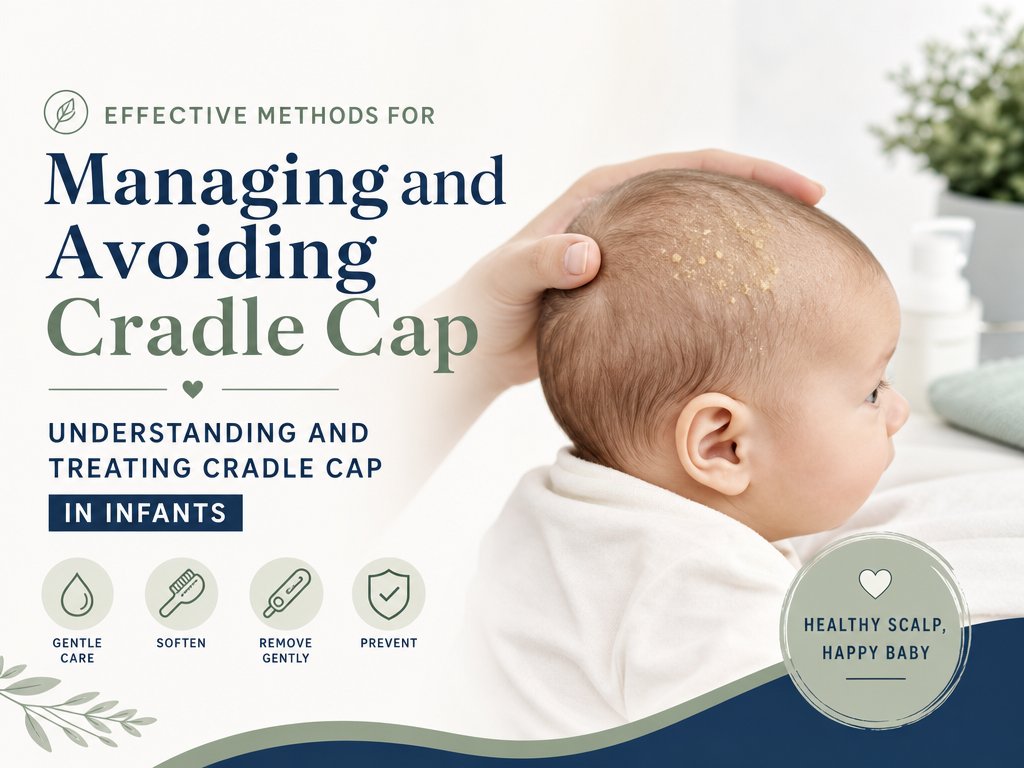
Understanding Cradle Cap
Cradle cap, also known as infantile seborrheic dermatitis, is a common condition affecting babies’ scalps. It is characterized by noninflammatory, scaly patches, which can also appear on the eyes, eyebrows, nose, and ears. Though it predominantly affects infants within the first three months, it is typically harmless and resolves itself over time.
Cradle cap shares similarities with dandruff, causing yellow or white patches that, while not painful, appear oily and thick, challenging to remove.
Prevention and Treatment Strategies
While cradle cap usually resolves itself, parents may wish to expedite the process and ensure their baby’s comfort. Here are several strategies:
Use of Emollients
Applying emollients can soften the scales, making them easier to remove. Oils can be massaged gently onto the affected areas, but it’s crucial to wash them off thoroughly to avoid further skin irritation.
Regular Scalp Washing
Washing the baby’s scalp daily with a gentle baby shampoo helps prevent and manage cradle cap. Massage the scalp as you wash to dislodge scales without scrubbing vigorously.
Avoid Scratching
Despite the temptation, avoid scratching the scales as this can lead to skin irritation or even infection. Instead, continue with the routine of emollients and careful washing.
Massaging and Brushing
Massaging the scalp during treatment ensures even product distribution and provides relaxation. Using gentle brushes can also loosen the scales.
Special Shampoos
For persistent cradle cap, over-the-counter dandruff shampoos can help but must be used with caution, ensuring they don’t irritate your baby’s skin or eyes. If needed, consult your pediatrician for prescription options.
Managing Infant Stress and Nutrition
Stress and nutrition play roles in cradle cap. Ensuring the infant’s basic comfort and considering potential nutritional deficiencies might be beneficial. Monitoring your baby’s cues and providing a stress-free environment contribute to their well-being and potentially mitigate cradle cap.
When to Consult a Doctor
Although cradle cap is not dangerous, persistent or worsening symptoms may require professional evaluation. Regular assessments by a pediatrician help ensure your infant’s health and comfort through effective treatments.