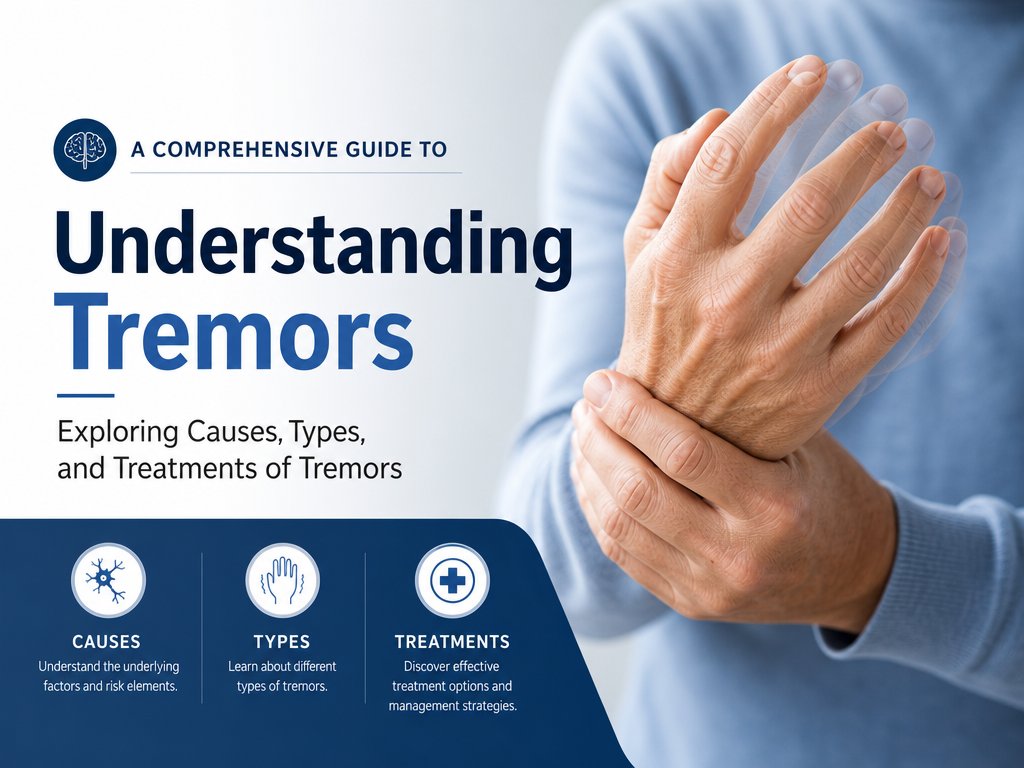
Introduction to Tremors
Tremors are unintended and uncontrollable rhythmic movements that can affect any part of the body, including the hands, arms, head, face, vocal cords, trunk, and legs. While they are often benign and not life-threatening, they can sometimes signal underlying medical conditions that require further investigation and care. This guide delves into tremors’ causes, types, and the range of available treatment options, aiming to provide a comprehensive understanding of this condition and its implications. Tremors can vary significantly, not only in the areas they affect but also in their severity and underlying cause.
What Are Tremors?
A tremor is a type of involuntary movement distinct from muscle spasms or twitches, which often occur abruptly without a rhythmic pattern. These movements can occur due to lifestyle factors such as excessive caffeine consumption, stress, or as a side effect of certain medications. More serious medical conditions like strokes, traumatic brain injury, or Parkinson’s disease can also precipitate tremors. In the brain, tremors are usually associated with disturbances in the cerebellum, the area that regulates muscular activity and plays a significant role in maintaining balance and coordination. It’s important to understand these nuances because they help in distinguishing tremors from other similar symptoms.
Types of Tremors
Resting vs. Action Tremors
Resting tremors occur when the body is at rest, and these tremors typically subside once movement begins. They primarily affect the hands and can be present in conditions like Parkinson’s disease. Action tremors, in contrast, appear during voluntary movements or activities. Within action tremors, there are further subcategories such as postural tremors, which happen when maintaining a position against gravity, and intention tremors, which become evident during targeted movement, like reaching for an object. These classifications help in the precise diagnosis and treatment of tremors.
Essential Tremors
Essential tremors are one of the most common movement disorders, impacting millions of people worldwide and often running in families, suggesting a genetic component. Primarily postural or intentional, they may show bilateral effects, typically affecting both sides of the body but can vary significantly in severity among individuals. Recent research suggests these tremors might be linked with cerebellar degeneration and, occasionally, they can coexist with Parkinson’s disease, though essential tremors themselves are not indicative of Parkinson’s. Lifestyle changes, such as reducing caffeine, managing stress, and using adaptive devices, can help manage symptoms. Moreover, awareness of familial patterns can also aid in early diagnosis and management.
Parkinsonian Tremors
Parkinsonian tremors are notable for beginning on one side of the body in most cases. They often appear as the first symptom of Parkinson’s disease, with symptoms usually emerging around the age of 60. These are typically resting tremors caused by dopamine depletion in the brain’s basal ganglia, a group of structures linked with movement control. As Parkinson’s progresses, other symptoms like muscle stiffness, slowness of movement, and postural instability may become apparent, highlighting the importance of early diagnosis and management. Early detection can sometimes result in better management of symptoms and potentially slow progression, offering hope and relief to the affected individuals and their families.
Other Types
Additional tremors include functional (psychogenic) tremors, which are typically influenced by psychological factors and can vary in presentation; dystonic tremors, common in individuals with dystonia, occurring irregularly; cerebellar tremors, due to damage within the cerebellum from stroke or injury; orthostatic tremors, characterized by rapid muscle contractions while standing; and physiological tremors, which are normally imperceptible but can become more pronounced under certain conditions, like fatigue or anxiety. Each category presents unique characteristics and manifestations, which require specific diagnostic approaches and interventions. Understanding these different types is crucial not only for achieving accurate diagnosis and developing effective treatment plans, but also for empowering patients through increased awareness and education.
Diagnosis and Examination
If unexplained tremors occur, consulting a healthcare professional is crucial for an accurate diagnosis. Physicians generally start with a thorough physical exam, observing tremor characteristics such as frequency, amplitude, and location. They may also conduct neurological tests to identify potential causes, assessing balance, coordination, and reflexes. Blood and urine tests could be necessary to rule out other medical conditions or ascertain metabolic or toxic causes. Additionally, imaging studies like MRI or CT scans might be employed to examine structural changes in the brain. Comprehensive testing ensures that the root cause of tremors is identified, facilitating precise and effective interventions. A proper diagnosis can lead to a better understanding and management of symptoms.
Treatment Options for Tremors
Treatment largely depends on the cause of the tremor. Managing the underlying condition can often alleviate the symptoms. Medication options include beta-blockers, primarily used for heart conditions but effective for certain types of tremors, and Botox injections, which can help with focal tremors. In more severe cases, deep brain stimulation, a surgical procedure, may be considered as a last resort. This involves implanting a device that sends electrical impulses to areas of the brain responsible for movement, offering significant relief for some patients. Additionally, physical therapy and the use of adaptive devices such as weighted utensils and braces may provide relief by improving coordination and stability. Furthermore, lifestyle modifications can be beneficial, with patients encouraged to avoid known tremor triggers, such as alcohol or certain drugs. Apart from medical interventions, support networks and community resources can also play a crucial role in managing this condition.
Conclusion
While tremors can be harmless and pose no significant risk, they warrant attention when they are unexplained or persistent. Affected individuals should seek medical evaluation to determine potential underlying conditions and suitable intervention strategies. Professional diagnosis and treatment plans can lead to better management of symptoms, enhancing the quality of life for those experiencing tremors. Staying informed about the latest research and treatment options can empower patients and caregivers to make educated decisions regarding care and intervention. Engaging with support groups and community resources also provides additional support, fostering a network of shared experiences and insights that can guide effective coping and adjustment to this condition. It’s essential for individuals to maintain an open dialogue with healthcare professionals to optimize treatment outcomes and adapt to any changes in the condition.