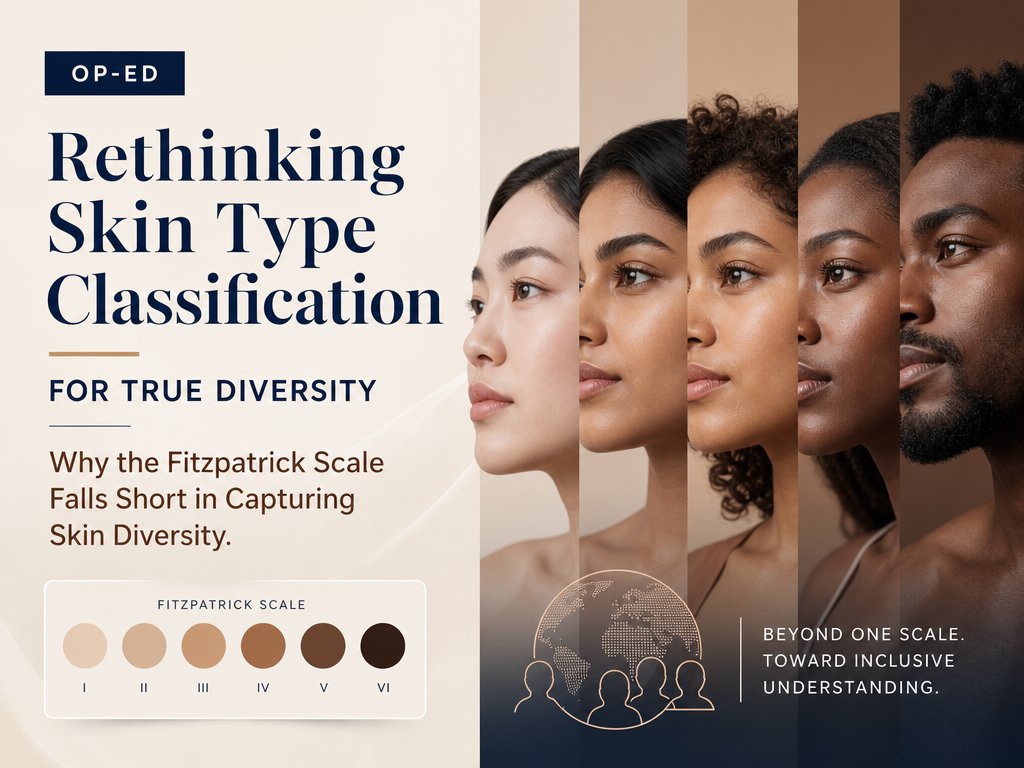
The Challenge of Skin Diversity in a Modern World
In the bustling streets of contemporary American cities, the diversity seen is a vivid testament to immigration’s profound legacy, encapsulating cultural fusion and evolution. Recognizing this diversity requires acknowledging differences in skin tones, both culturally and medically. It involves understanding that skin is not merely about appearance, but also integrates intricate socio-cultural narratives and histories that have collectively shaped societies over time, reflecting deep-rooted traditions and values.
The Limitations of the Fitzpatrick Skin Type Scale
Understanding the Foundations
The Fitzpatrick Skin Type (FST) scale, a prominent and widely-utilized tool in the field of dermatology, emerged in 1972 initially to predict skin reactions to sun exposure and phototherapy efficacy. Originally tailored for individuals with lighter skin, the scale later broadened its scope to include those with darker skin tones. Its primary role is to measure melanin levels to assess sunburn risk. Despite its utility, this scale predominantly reflected Caucasian skin attributes, and its simplistic classification into only six types has proven inadequate to encompass the true diversity of human skin variations and nuances.
Why the Scale is Inadequate
While widely used, the FST scale relies on subjective self-reporting, leading to inconsistent data, particularly among diverse populations. Moreover, it fails to account for the varied skin reactions to UV treatment, such as irritation and itching, which are often more pronounced in darker skin tones compared to lighter ones. Recent research has highlighted that these nuances are critical when treating skin of color, often requiring different therapeutic approaches. Additionally, the FST scale does not consider other factors like genetic background and environmental influences, nor does it take into account lifestyle factors, which might significantly affect an individual’s skin response to various stimuli, thereby limiting its clinical applicability and relevance.
Advancements and Alternatives
Emerging Methods and Technology
Recognizing these inherent limitations, tech giants like Google have pivoted towards the Monk Skin Tone Scale, aimed at providing a broader and more inclusive representation of skin colors. This innovative approach leverages advanced technology to incorporate a wider array of skin tones into its algorithms, potentially transforming sectors such as digital imaging and artificial intelligence by providing more precise color matching and representation. Additionally, Brazilian artist Angélica Dass’s Humanae project boldly uses the Pantone Color System to depict an extensive range of skin tones, challenging conventional and narrow notions around skin color and race. Her work powerfully illustrates the beauty and individuality present within various skin shades, encouraging viewers to see beyond standard classifications and appreciate the rich tapestry of human diversity, emphasizing that everyone’s skin tone has its own unique beauty and significance.
The Path Forward for Greater Inclusivity
Fifty percent of the U.S. population is projected to be of non-European descent by 2050, creating a more ethnically diverse landscape. Acknowledging this transformative shift, the medical community must take steps to refine existing models to more accurately reflect this expanding diversity. The expansion of the FST’s original intent can inform better practices in clinical settings, product developments, and education. Addressing these issues requires cross-disciplinary collaboration, integrating insights from various fields like anthropology, genetics, and sociology to enrich our understanding of skin diversity from multiple perspectives.
As we continue learning, these insights should not only inform clinical protocols but also significantly influence consumer products and medical training. Transforming our approach is not just a medical necessity but a cultural one as well, advocating for a more comprehensive understanding and appreciation of skin diversity. This transformation calls for an active, concerted effort to educate healthcare professionals about the specific needs and concerns of diverse populations, ensuring equity in medical practices. By embracing this inclusive future, we not only acknowledge past oversights but also pave the way for a more unified and understanding society, one that values every hue and tone of human skin as part of its rich, collective identity. In this era of growing diversity, fostering a nuanced appreciation of varied skin types will enhance empathy and drive social change. By doing so, we can collaboratively work towards innovations that genuinely reflect the needs of all people, creating a world where everyone’s unique characteristics are acknowledged, respected, and celebrated as fundamental parts of the shared human experience.