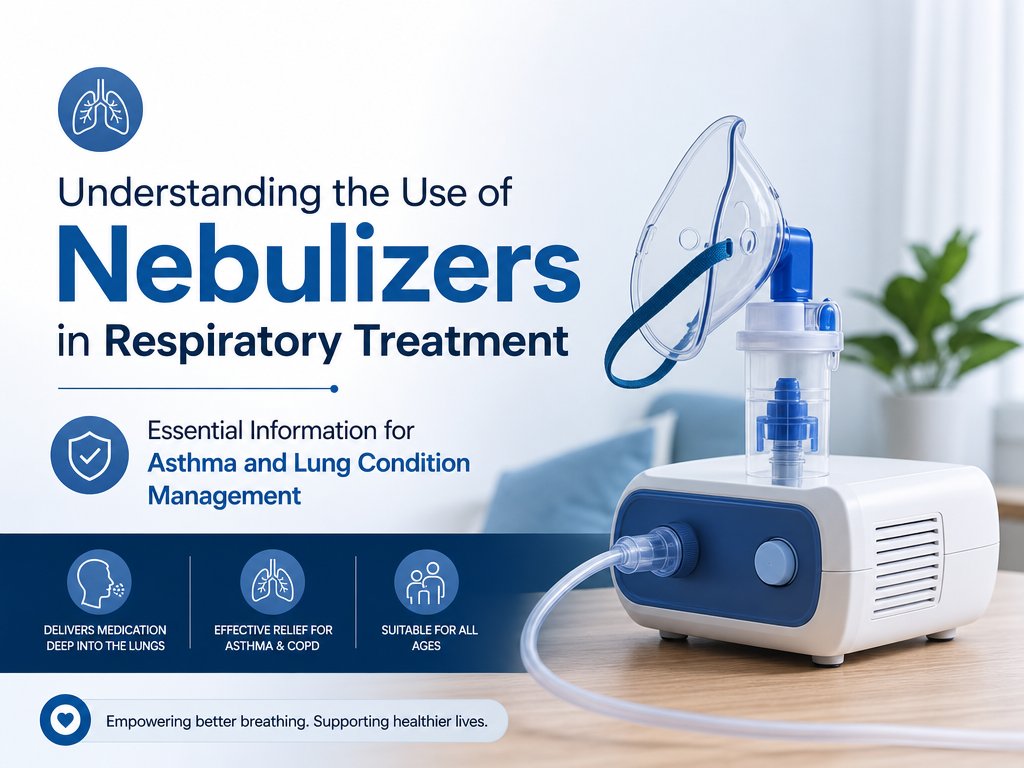
Introduction to Nebulizers
Nebulizers are devices that transform liquid medication into a mist, making it easier for medication to be absorbed directly by the lungs. These machines are pivotal for individuals suffering from respiratory conditions like asthma, COPD, cystic fibrosis, and other lung issues, providing significant relief and aiding in better respiratory health by delivering medication quickly and efficiently to the lungs.
Types and Uses of Nebulizers
Nebulizers are typically available in electric or battery-powered versions, allowing for versatility in usage. They can be either portable, facilitating use on-the-go, or stationary, necessitating a wall outlet for power. All models are composed of a medication container, and either a mouthpiece or a mask to facilitate inhalation of the medicated mist.
Nebulizers play a crucial role not only for chronic conditions such as asthma but also in palliative care and the treatment of young children, who may struggle with other methods of medication delivery. Doctors might suggest their use because they are extremely efficient in delivering medication directly to the lungs where it is needed most.
Main Nebulizer Types
- Jet Nebulizers: These utilize compressed air to turn liquid medicine into a spray.
- Ultrasonic Nebulizers: These use ultrasonic waves to convert liquid medicine into a mist.
- Mesh Nebulizers: Featuring a mesh with tiny holes that allow the medicine to turn into a mist.
Your doctor will guide you on how frequently to use your nebulizer and provide you with specific treatment instructions personalized to your needs and condition.
Using and Caring for Your Nebulizer
Using a nebulizer is straightforward and typically takes about 10 to 15 minutes per session, requiring you to simply breathe normally. Specific instructions on how to properly use the nebulizer and administer the medication will be provided by your healthcare provider to ensure effective treatment results.
A nebulizer is often a preferred choice for children who may struggle with inhaler techniques, particularly because it does not require the coordinated inhalation that inhalers do. However, during acute conditions like an asthma attack, inhalers might be more efficient due to their immediate setup and fast action.
Medication and Maintenance
Medications commonly used in nebulizers include bronchodilators, corticosteroids, and other anti-inflammatory drugs. These medications are essential in managing respiratory conditions, and it’s crucial they are used exactly as per your doctor’s prescriptions. Some medications come pre-mixed, while others may require mixing before use, depending on the specific treatment regimen prescribed.
Maintaining proper hygiene of the nebulizer machine is vital to avoid infections and ensure optimal functionality. Detailed cleaning instructions will be provided to guarantee that all parts of the nebulizer are kept in clean condition. Crucially, components like the tubing must be regularly replaced, as they cannot be properly cleaned inside.
Conclusion
Nebulizers offer vital support in managing various respiratory conditions such as COPD, asthma, and cystic fibrosis, and are sometimes used in conjunction with inhalers to maximize treatment effectiveness. Selecting the correct type of nebulizer and adhering to guidance on its proper use and maintenance, as provided by your healthcare provider, is crucial for achieving effective and long-lasting treatment outcomes for respiratory ailments.