Introduction to the Skeletal System
The human skeletal system serves as the structural framework for the body, comprising bones, cartilage, tendons, and ligaments. It accounts for roughly 20% of an individual’s body weight, providing the foundation for movement, support, and protection of vital organs.
Bone Composition and Differences
An adult human skeleton typically consists of 206 bones. Children have more bones since many fuse together during growth. Notably, male and female skeletons differ, with males generally having longer and denser bones, while females possess broader pelvises to facilitate childbirth. These distinctions play an essential role in functions like mobility and reproduction.
Axial and Appendicular Skeleton
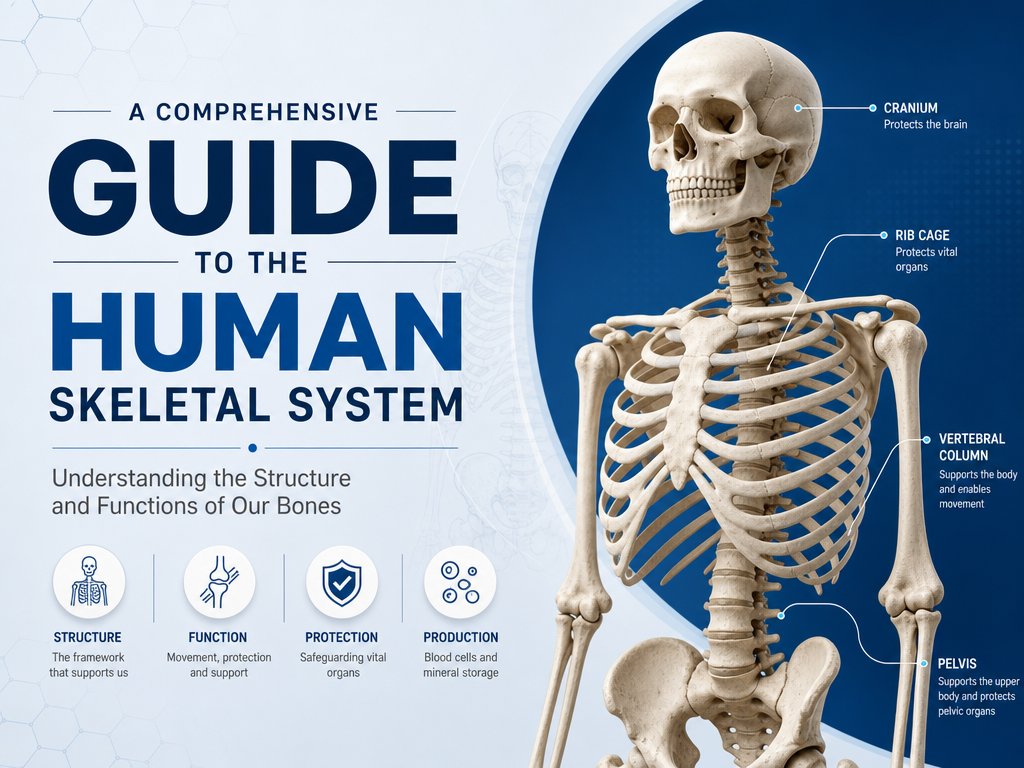
The human skeleton is divided into the axial and appendicular skeletons. The axial skeleton includes 80 bones forming the body’s central axis, such as the skull, vertebral column, and thoracic cage.
The Skull
Adults have 22 skull bones, including six auditory ossicles within the ears, which play a crucial role in sound transmission. The skull performs protective functions, safeguarding the brain and sensory organs.
Vertebral Column and Thoracic Cage
The vertebral column consists of 26 bones, with 24 vertebrae preceding the sacrum and coccyx. The thoracic cage, composed of the sternum and 12 rib pairs, protects vital organs such as the heart and lungs, and assists in respiratory functions.
Appendicular Skeleton
Featuring 126 bones, the appendicular skeleton encompasses the limbs and girdles. The pectoral girdle, though lightweight, is a vital structure that connects the arms to the axial skeleton, involving the clavicle and scapula, which allows a wide range of motion.
Limbs and Pelvic Girdle
Each arm comprises 30 bones, as does each leg, giving the limbs a balance between strength and flexibility. The pelvic girdle, or hips, links the legs to the body with its two hip bones; it supports the weight of the upper body and allows mobility while maintaining balance.
Functions and Common Conditions
Beyond support, the skeletal system facilitates movement, offers protection, stores calcium, and produces blood cells. Several common conditions impact it, such as:
Fractures
Fractures, involving broken bones, typically result from trauma. They vary in type based on the location and nature of the break. Treatment often requires medical intervention to ensure proper healing and restoration of function.
Metabolic Bone Diseases
These conditions affect bone strength, often due to vitamin deficiencies or medication side effects, impacting bone mass. Osteoporosis, a common metabolic bone disease, leads to fragile bones and an increased risk of fractures.
Arthritis
Characterized by joint inflammation, arthritis limits movement and causes pain. It results from factors like cartilage breakdown, autoimmune diseases, or infection. Management often includes medication and lifestyle changes to maintain joint function.
Cancer
Bone tissue cancer is rare, but bones also create cells where cancers like myeloma or lymphoma can develop. Early diagnosis and treatment are critical to managing bone-related cancers and preventing complications.
Spinal Curvature
Abnormal spinal curvatures, such as scoliosis, alter its usual form. Generally, the spine exhibits gentle curves that facilitate balance and flexibility. Severe cases may require braces or surgery to correct alignment and improve quality of life.
Conclusion: Maintaining Skeletal Health
Maintaining the skeletal system is crucial for overall health. Regular exercise, a balanced diet rich in calcium and vitamin D, and proper posture contribute to keeping bones strong and functional throughout life. Avoiding smoking and excessive alcohol consumption also plays a role in preserving bone density. By adopting these practices, individuals can enjoy long-term skeletal health, reducing the risk of fractures or bone-related conditions. Ongoing research continues to explore new ways to treat and prevent skeletal disorders, promising hope for future advancements in the field.