Introduction to Heart Failure
Heart failure is a medical condition that significantly affects the heart’s capacity to pump blood efficiently throughout the body. This complex syndrome impacts millions worldwide and is generally considered a progressive illness, often worsening over time if not managed effectively. The body’s attempt to compensate for the failing heart often involves intricate adjustments in preload and afterload, which are critical factors that influence both the heart’s performance and the volume of blood it pumps during its cycle.
The Mechanics of Preload and Afterload
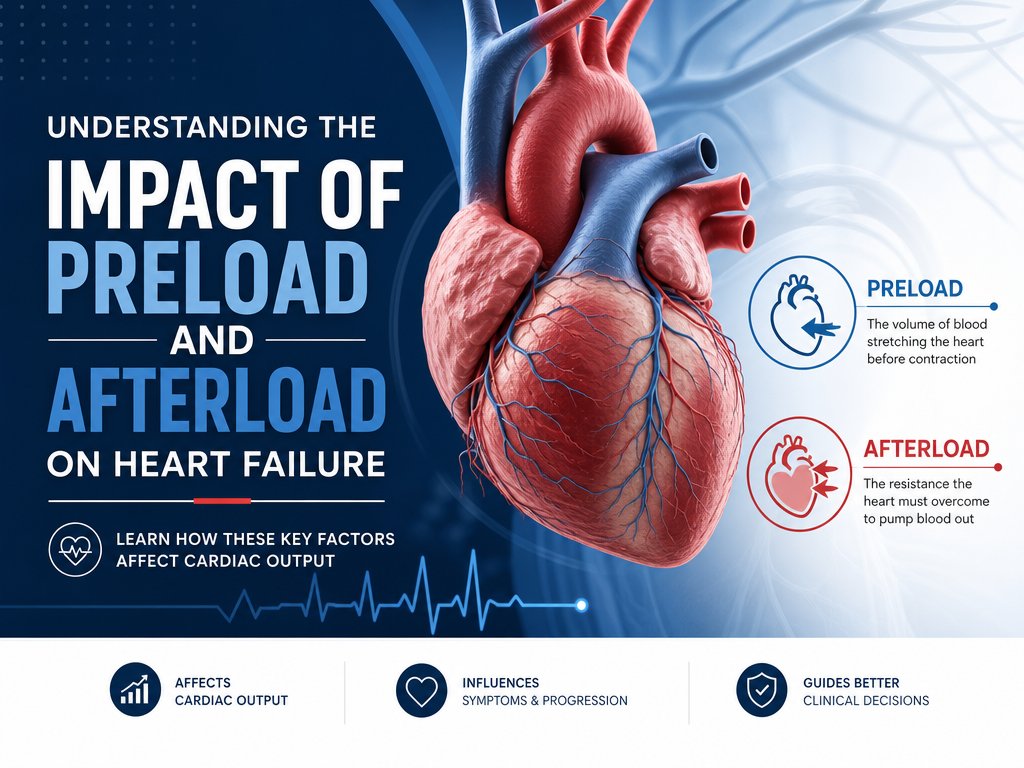
Preload is a term that refers to the initial stretching of the cardiac muscle fibers at the end of diastole, right before the heart contracts. Essentially, it is determined by the volume of blood returning to the heart, commonly known as the left ventricular end-diastolic pressure. For effective heart function, it’s imperative that the heart maintains sufficient elasticity to fill properly with an incoming volume of blood, allowing for adequate circulation.
On the other hand, afterload is the resistance the heart must overcome to circulate blood throughout the body effectively. Also identified as systemic vascular resistance, afterload tends to increase when blood vessels are constricted or when blood pressure in these vessels is elevated. This condition makes it more challenging for the heart to eject blood during systole. Successful management of afterload can lead to improved cardiac performance.
Influence of Contractility
Contractility is the heart’s intrinsic ability to contract forcefully, irrespective of changes in preload or afterload. In the context of heart failure, damage to the heart muscle often accompanies a reduction in contractility, thereby impairing the heart’s ability to effectively pump blood to meet the body’s needs. Maintaining optimal contractility is crucial for supporting adequate circulation and oxygen delivery to tissues.
How Heart Failure Modifies Preload and Afterload
Heart failure can present itself in two principal forms: heart failure with reduced ejection fraction (HFrEF) and heart failure with preserved ejection fraction (HFpEF). Each of these forms interacts uniquely with preload and afterload, impacting overall cardiac function.
In cases of HFrEF, the heart’s contractility is notably diminished, and the afterload often tends to rise, placing additional strain on the heart as it attempts to pump against greater resistance. This impaired interaction might necessitate careful medical evaluation and management to prevent worsening symptoms. Conversely, HFpEF leads to decreased preload due to the heart’s insufficient relaxation during diastole. This can result in elevated afterload because the ventricles become stiffer, causing the heart to work harder to eject blood, necessitating a different therapeutic approach.
Medications and Management
Several pharmaceutical interventions aim to effectively modify preload and afterload, with the ultimate goal of enhancing heart function. Diuretics are a class of medications often used to reduce preload by removing excess fluid from the body, which decreases the volume of blood the heart has to manage. ACE inhibitors and angiotensin receptor blockers (ARBs) are commonly prescribed to lower afterload by dilating blood vessels, thus reducing the resistance the heart encounters. These drugs might also help prevent further cardiac remodeling and provide additional renal benefits by decreasing strain on the kidneys, which is frequently compromised in heart failure patients.
Moreover, a different class of medications aim to decrease afterload, thereby reducing the vascular resistance that the heart faces during each heartbeat. This approach allows the heart to operate more efficiently, requiring less pressure to supply vital nutrients and oxygenated blood to the body’s organs. The combination of these medications can often help to strike a balance, allowing for improved heart function and reduced symptoms associated with heart failure.
Healthcare providers typically adjust these medications regularly, depending on precise needs and symptoms, in order to closely monitor heart performance and manage heart failure symptoms more effectively. In some cases, devices such as pacemakers or surgical interventions may also be recommended to support medication therapies. Cardiac resynchronization therapy (CRT) is another option that can enhance cardiac function by coordinating the contraction of heart muscles to improve efficiency. These options provide an integrated approach to managing heart failure and may substantially improve patient outcomes.
Conclusion
Understanding and managing preload and afterload are crucial components in the treatment and management of heart failure. These factors profoundly impact the heart’s ability to function correctly and significantly influence the selection of therapeutic interventions. Therefore, it’s essential to consult with healthcare professionals who are adequately experienced in the field to comprehend how these factors affect individual conditions and what medications or interventions may provide the most benefit. Continuous advancements in medicine are expanding the options available for treatment, offering hope for improved quality of life for individuals grappling with heart failure. Educating patients about the significance of these cardiovascular dynamics plays a vital role in fostering effective self-management practices and enables them to actively participate in their treatment plans. Fully understanding heart failure’s impact on physiological parameters like preload, afterload, and contractility can lead to meaningful discussions with their healthcare team, optimizing long-term outcomes.